
【Photo Diary】 (2) Visit to Sri Lanka for Its First National Leprosy Conference
Published on December 26, 2025
[November 6, Colombo, Sri Lanka]
I would like to share with you some of the photographs taken during my visit to Sri Lanaka from November 6 to 8, 2025, in my capacity as honorary chair of The Nippon Foundation and WHO Goodwill Ambassador for Leprosy Elimination.

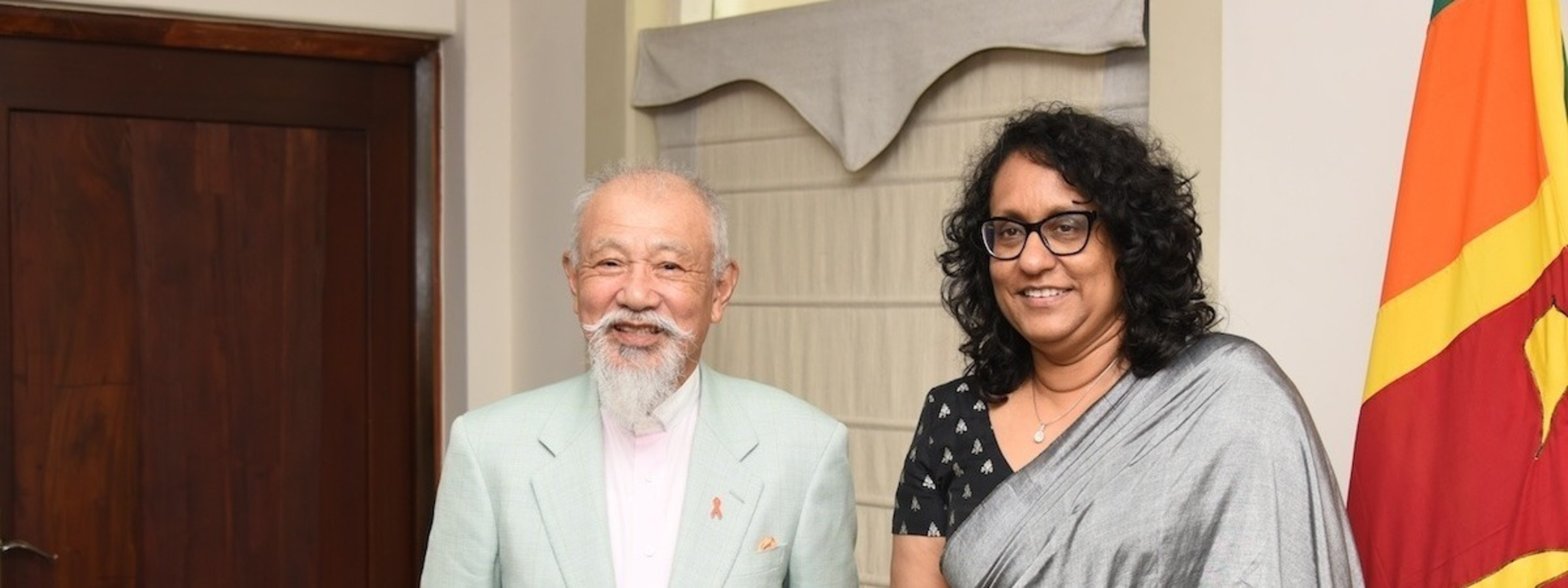
With Prime Minister Harini Nireka Amarasuriya, who also serves as Education Minister.
At the meeting at her official residence Temple Trees, I proposed upgrading the Sri Lanka School of Prosthetics and Orthotics (SLSPO) to university level with government assistance.
I told her that the institution meets the standards of the International Society for Prosthetics and Orthotics (ISPO), adding a four-year university would attract many more students from other Asian nations.
Prime Minister Amarasuriya responded positively, noting that she would instruct the Ministry of Education to assess the feasibility of this proposal.
Established in 2004 with support from The Nippon Foundation, the school’s three-year full-time course trains Sri Lankans from across the country to be prosthetist/orthotists-specialists who prescribe and fit artificial limbs and orthopaedic braces for persons with disabilities. Our involvement formed part of our effort to support persons with disabilities in Southeast Asian countries, where many people have lost limbs after coming into contact with landmines used in internal conflicts.
The prime minister also commended The Nippon Foundation’s “100 Schools Project” aimed at renovating and modernizing 100 schools in Northern Province and reaffirmed the government’s commitment to improving the educational and social inclusion of students with disabilities.
She also acknowledged that some of the government’s programs have limited resources and expressed appreciation for Japan’s continued support in addressing these challenges.

Meeting with some 40 representatives of organizations of persons affected by leprosy and their supporters-the Leprosy People Association (LPA) and Kaveri Kala Manram (KKM).
I commended the cooperation of these organizations for working in unity to eliminate the disease and its associated stigma and discrimination.
I said it is impossible to reduce the number of leprosy cases in the country without the cooperation of NGOs that work closely with persons affected by the disease, and called on them to step up their activities across the country to achieve a leprosy-free Sri Lanka.
LPA was established in 2016 and currently has 578 members across six branches. The association supports persons affected by leprosy to speak up for themselves and participate actively in society.
KKM, a cultural and humanitarian organization, has been involved in raising awareness of leprosy since the organization was founded in 1998 by youths from villages toward the northern tip of the Jaffna Peninsula.


With members of the Daigen Gumi taiko ensemble and Japanese Ambassador to Sri Lanka Akio Isomata (center).
The ensemble is a member of The Nippon Taiko Foundation, Japan’s largest national body of taiko performance groups and a partner organization of The Nippon Foundation.
(To be continued)