
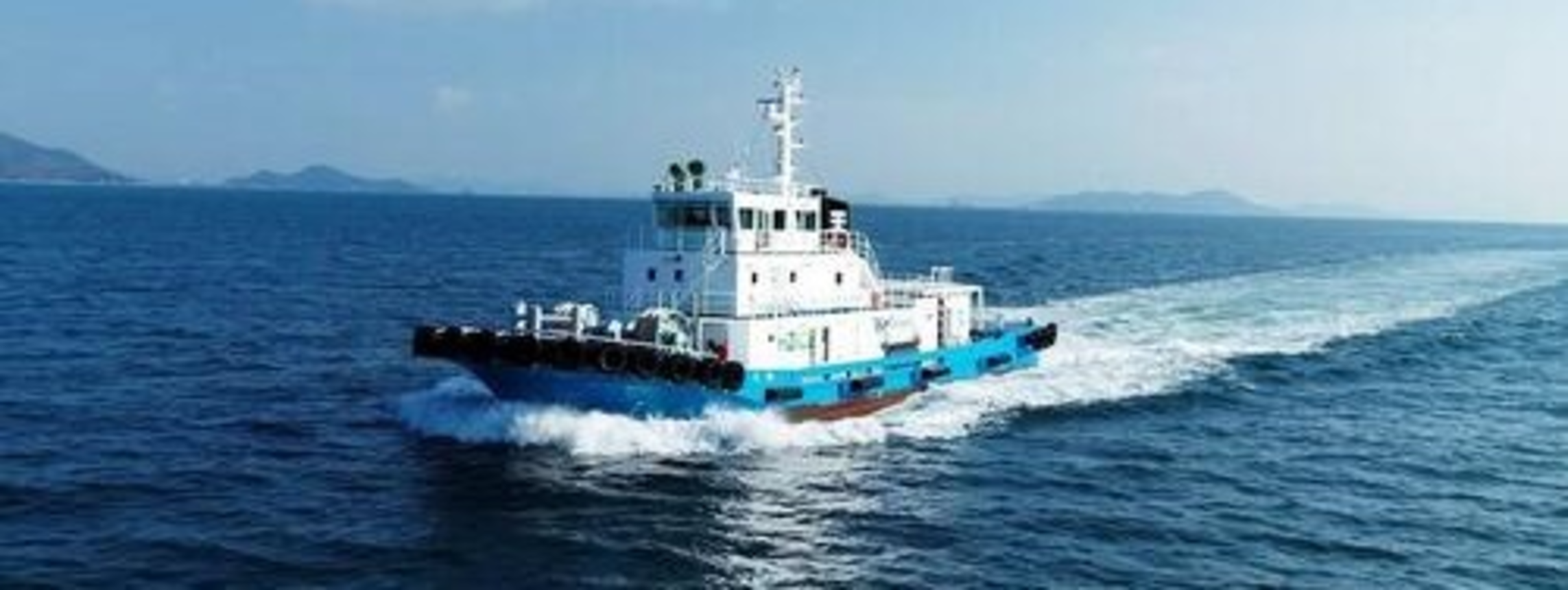
Japanese Consortium Successfully Demonstrates World’s First “Zero-Carbon” Voyage Using Dual-Fueled Hydrogen Tugboat
Published on May 27, 2026
A consortium of 12 Japanese companies led by JPN H₂YDRO CO. has successful conducted a demonstration voyage of a tugboat equipped with high-powered hydrogen dual-fuel engines that emitted no carbon dioxide (CO2) during operation.
This was the world’s first “zero-carbon” voyage using a dual-fuel mixture of hydrogen and biodiesel, regardless of vessel type, The Nippon Foundation announced at a press conference in Fukuyama, Hiroshima Prefecture, western Japan, on January 14.
The successful demonstration of the tug, named Ten-Oh, was conducted in the Seto Inland Sea off Fukuyama on December 24, 2025.
It marked a major step forward under the “Zero Emission Ships Project” that The Nippon Foundation launched in January 2022 with the aim of prioritizing the development of hydrogen-fueled ships as the driving force for Japan’s efforts to achieve carbon neutrality in its coastal shipping sector by 2050.
Tugboats play a pivotal role in assisting large vessels to maneuver safely and smoothly when entering or leaving port. For this reason, they must combine high maneuverability with strong engine output.
The new 38-meter-long tug with a gross tonnage of 289 tons is powered by twin 12-cylinder hydrogen-blended engines (4,400 horsepower class) and stores around 250 kilograms of hydrogen in high-pressure tanks.
The system enables the vessel to operate using a combination of hydrogen and traditional marine fuels, such as heavy fuel oil, and reduce CO2 emissions by approximately 60 percent compared to conventional tugboats that use only traditional marine fuels, according to Tsuneishi Shipbuilding Co. that built and delivered the tug in October 2025.
For the demonstration test, biodiesel fuel (B100), a carbon-neutral fuel that produces essentially zero CO2 emissions, was used in place of fuel oil.
In the unlikely event of a hydrogen fuel system failure, the vessel can still operate solely on marine fuel, maintaining the same standard of safety as conventional vessels.
The engines were developed at the Hydrogen Engine R&D Center completed in Tsuneishi’s shipyard in Fukuyama in September 2024 and run by JPN H₂YDRO CO.
For hydrogen loading, a hydrogen station designed specifically for ships was completed in the dockyard facing the Seto Inland Sea in early 2025. It is the world’s first hydrogen station for ships, with facilities for loading large amounts of hydrogen fuel, mooring equipment and equipment to maintain the ship’s stability during loading.
Roughly 80 local elementary school children attended the press event and two of them joined Mr. Mitsuyuki Unno, executive director of The Nippon Foundation, in giving the signal to commence loading the tugboat Ten-Oh with hydrogen from the station.
The consortium also plans to install a floating hydrogen fuel loading station on the wharf by the end of 2026.

Speaking at the press conference in Fukuyama, western Japan, on January 14 to announce the world’s first “zero carbon” voyage by the dual-fueled hydrogen tugboat Ten-Oh, Mr. Mitsuyuki Unno, executive director of The Nippon Foundation, commented: “The success of this demonstration was a result of cooperation across sectors. It is a first step toward achieving carbon neutrality by 2050, and will accelerate decarbonization in Japan’s coastal shipping industry going forward. In addition to being a major advance in carbon neutrality, I believe the use of hydrogen and engine technologies to develop a zero-emission ship will support Japan’s ‘future industries.’ We will build on this success going forward with steady development and demonstrations using a car ferry and tankers (under the foundation’s “Zero Emission Ships Project”) with the aim of achieving a future in which zero-emission ships crossing the ocean are a matter of course.”
Mr. Mitsuo Kambara, representative director and president of JPN H₂YDRO Co., stated: “We have already commercialized ships equipped with hydrogen-fueled engines, and I am confident that these represent one possible solution that can be used immediately for the decarbonization of Japan’s marine transport and ports. This zero-carbon voyage using a mixture of hydrogen and bio-fuel was the first of its kind anywhere in the world, and marks a major step toward decarbonization using hydrogen dual-fueled engines. We will continue to promote the adoption of hydrogen engines in ships and port facilities, where they provide added value in terms of economy and safety.”
JPN H₂YDRO is a joint venture between the Tsuneishi Group, a Fukuyama-based major Japanese shipbuilding group, and CMB (Compagnie Maritime Belge), a shipbuilding and logistics company headquartered in Antwerp, Belgium.
The Nippon Foundation provided the 12-compnay consortium, led by JPN H₂YDRO, with 840 million yen (about $5.3 million) to help it develop and manufacture Ten-Oh’s hydrogen dual-fuel engines and other related equipment.
Two other consortia are part of the Zero Emission Ships Project.
In April 2024, a group of five companies, led by MOTENA-Sea, Ltd. under the aegis of Mitsui O.S.K. Lines, Ltd., successfully conducted a demonstration test using the hybrid passenger ship HANARIA that can select from hydrogen fuel cells, lithium-ion batteries and biodiesel fuel as its propulsion source. No CO2 was emitted during combustion.
Meanwhile, a group consisting of Yanmar Power Technology Co. (YPT), a subsidiary of Yanmar Holdings, and five other companies are aiming to build and demonstrate a tanker equipped with a hydrogen-fueled combustion engine by March 2027.
Given Japan’s advanced technological capabilities, I sincerely hope that the consortia will overcome all the challenges involved and continue to lead the global campaign to make the world’s shipping industry carbon-neutral and combat climate change.
For our part, the foundation is resolved to support the nation’s fledgling fleet of zero emission ships for decades to come.