Japanese Consortia Start Commercial Service of Two Fully Autonomous Ships Under the “MEGURI2040” Project
Published on June 5, 2026
Two groups of Japanese companies have started fully autonomous operations of a containership and a Roll-on/Roll-off (RORO) cargo ship on regular commercial routes, making them the second and third vessels to reach this milestone under the “MEGURI2040” fully autonomous ship project financed and administered by The Nippon Foundation.
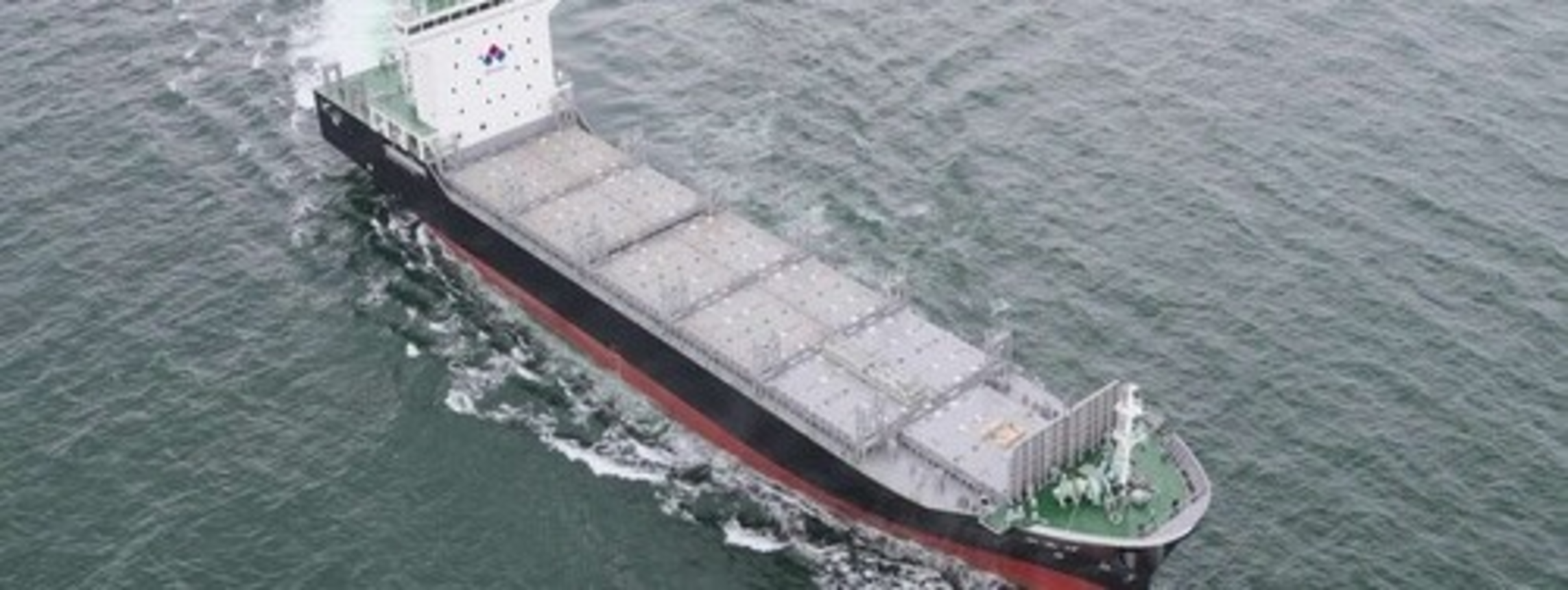
On January 30, the newly-built 5,689 gross-ton 134.9-meter-long containership Genbu started to serve a regular commercial route linking Kobe, Osaka, Nagoya, Yokohama and Tokyo.
It became the world’s first containership to commence Level 4-equivalent autonomous navigation-allowing fully automated voyages without human intervention in designated waters-carrying general cargo on the liner service, the foundation announced at a press conference in Kobe, western Japan, the same day.
The start of the containership’s commercial operations marked an important step in the second phase in the MEGURI2040 project, launched by the foundation in February 2020 with the ambitious goal of making half of Japan’s domestic coastal shipping fleet crewless by 2040.
The announcement on the containership Genbu came after ClassNK (Nippon Kaiji Kyokai), Japan’s non-governmental ship classification society, gave the vessel its formal certification for autonomous operations effective on January 26, following a series of successful demonstration voyages on this busy route.
Two days later, the Japanese Ministry of Land, Infrastructure, Transport and Tourism (MLIT) formally certified the ship’s crewless navigation system on January 28 based on the safety standards and inspection methods for unmanned shipping established in 2024.
The containership was launched in April 2025 by a 15-company consortium, led by MTI (Monohakobi Technology Institute) Co. together with Japan Marine Science Inc. (an NYK-Group company) and Mitsubishi Research Institute, Inc.
The Genbu is the only newly-built vessel designed and built as a full-packaged autonomous ship under the MEGURI2040 project. Others are existing vessels retrofitted with unmanned operating systems.
Mr. Mitsuyuki Unno, executive director of The Nippon Foundation, told the press conference: “The Genbu is equipped with a full suite of unmanned navigation functions equivalent to Level 4 autonomous operations, featuring an automated berthing and unberthing system and an augmented reality (AR) navigation system for monitoring from land. By building upon the actual crewless operations of the Genbu and other vessels under the project, I hope Japan will play a leading role in creating international rules governing autonomous shipping in international waters.”
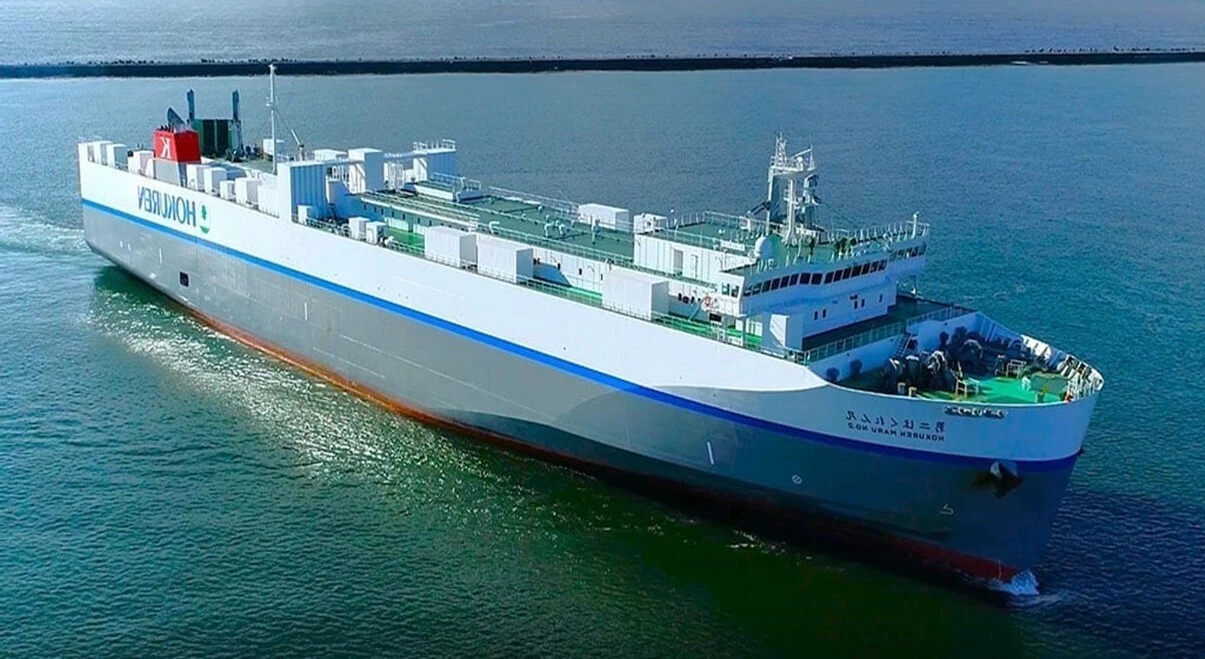
Following in the footsteps of the containership Genbu, the Roll-on/Roll-off (RORO) cargo ship Hokuren Maru No. 2 has started fully autonomous operations on a commercial sea route under the “MEGURI2040” autonomous ship project financed and administered by The Nippon Foundation.
The 11,413 gross-ton, 173.8-meter-long ship became the third vessel to start fully crewless operations on a regular commercial route under the project, navigating a sea route of approximately 1,600 kilometers round trip between Hitachi, some 140 kilometers northeast of Tokyo, and Kushiro in Hokkaido, Japan’s northernmost prefecture, the foundation announced at a press conference in Kushiro on March 9.
The announcement came after ClassNK (Nippon Kaiji Kyokai), Japan’s non-governmental ship classification society, added the Hokuren Maru No. 2 to its register as Japan’s first RORO cargo ship equipped with a fully autonomous navigation system, effective on January 27, 2026.
Subsequently, the Japanese Ministry of Land, Infrastructure, Transport and Tourism (MLIT) formally certified the vessel’s crewless navigation system, effective on February 9.
The go-ahead followed a series of demonstration voyages by the ship on the designated route, which passes through waters heavily used by fishing boats and where foggy conditions are possible.
The Hokuren Maru No. 2 is operated by a three-company team led by Kawasaki Kisen Kaisha (K Line) on the route, and mainly carries raw milk, agricultural, livestock and other products produced in Hokkaido to the Tokyo metropolitan area.
RORO ships are cargo ships designed to carry wheeled cargo, such as cars, motorcycles and trucks, which are driven on and off the ship on their own wheels
Speaking at the press conference, Mr. Mitsuyuki Unno, executive director of The Nippon Foundation, commented: “We hope to obtain valuable data from the autonomous voyages of the Hokuren Maru No. 2, which operates in the northern seas where rough weather is common. RORO ships are extremely important for the future of the domestic economy as a key to promoting modal shift, and we are very pleased that the vessel has passed the government ship inspection as the first RORO ship as an autonomous vessel. Based on the knowledge gained from this challenge and commercial operations going forward, we hope the data will not only contribute to the stability and safety of logistics by reducing the burden on seafarers, but also to the creation of international rules.”
In the first stage of the MEGURI2040 project, five groups of companies successfully conducted voyages by six vessels between January and March 2022, demonstrating autonomous shipping technologies.
More than 50 Japanese businesses are now involved, comprising the country’s leading shipping and shipbuilding companies, as well as equipment manufacturers, communications, IT, insurance, think tanks and other firms, to form what they claim to be an “All Japan” team.
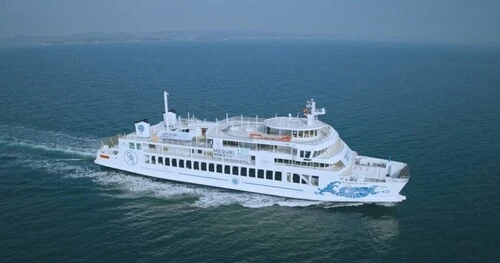
The Olympia Dream Seto, a passenger ferry, was the world’s first vessel to start fully autonomous operations on a regular commercial route, achieving this milestone in December 2025 in the Seto Inland Sea.
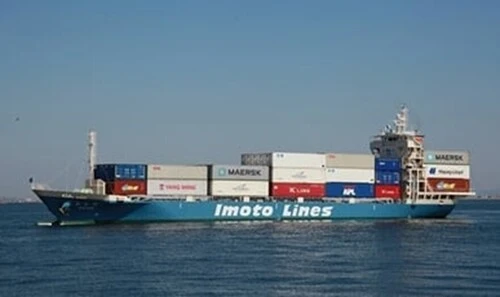
A fourth vessel, the 749 gross-ton 65-meter-long containership Mikage, is being prepared for ClassNK and MLIT certifications of its unmanned navigation system.
Japan’s domestic coastal shipping industry is currently grappling with the twin problems of an ageing seafarer population and a decline in crew numbers.
Given this circumstances, autonomous ships are expected to go a long way in reducing workloads and trimming operating costs. Besides, crewless navigation can also contribute to safety by reducing human error, which accounts for about 80% of marine accidents.
Given the high levels of Japan’s IT and AI technologies combined with its years of experience as a leading shipping and shipbuilding country, I strongly hope that Japan will lead the way in the field of unmanned vessels.