
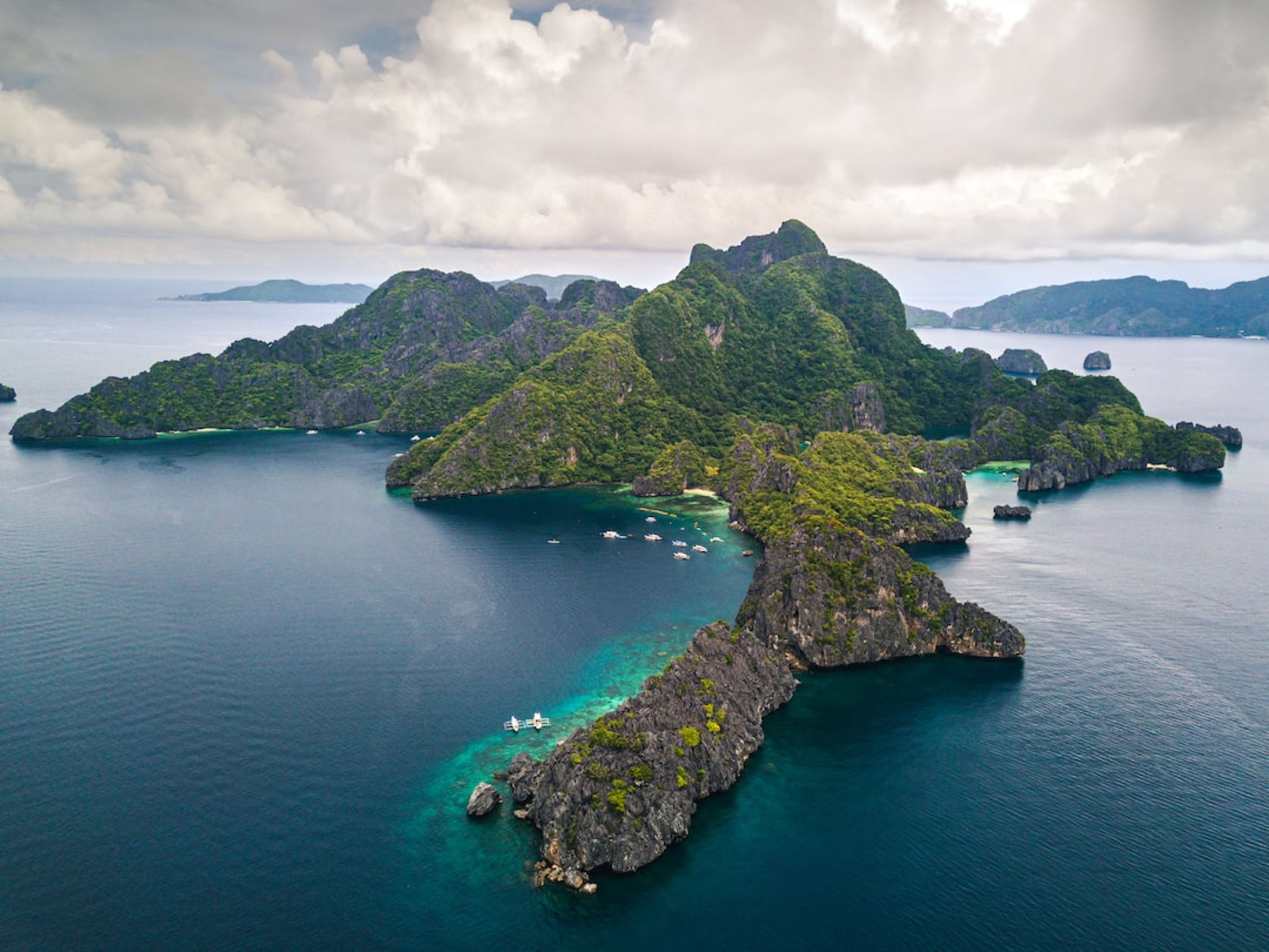
Japan Finds over 7,000 More Islands in Its Territory Than Previously Thought
The Geospatial Information Authority of Japan (GSI) has announced that new digital mapping technology has revealed that there are 14,125 islands in Japanese waters, more than double the number of 6,852 released by the Japanese Coast Guard in 1987.
The United Nations Convention on the Law of the Sea defines an island as a “naturally formed area of land, surrounded by water, which is above water at high tide.”
In the last survey, Coast Guard geographers counted by hand all naturally occurring land areas with a circumference of 100 meters or longer on paper maps.
According to the latest report announced on February 28, the GSI used a computer to automatically count islands based on its electronic land map and cross-referenced the map with past aerial photographs and other data in order to exclude artificially reclaimed land.
The GSI emphasized that the revised figure did not change the total area of land under Japanese control. Rather, it represented improvements in surveying technology and the level of precision in the maps used for the count.
The Japanese archipelago comprises four main islands, more than 400 smaller populated islands and many more uninhabited islets.
While accepting the new figures, I believe the thorny issue now facing Japan is how to regulate these uninhabited islets.
In a video posted on Chinese social media in late January, a Chinese woman claimed to have bought an island in the southernmost Japanese prefecture of Okinawa.
Chinese media quoted the woman in her 30s as saying that she bought about half of the uninhabited isle of Yanahajima, located north of the prefecture’s main island, in the name of a company run by her relative.
According to public records, about half of the 740,000-square-meter island has been owned by a Tokyo-based consulting firm that specializes in Chinese businesses since February 2021.
In another video featuring her visit to the island, the woman said, “I bought this island,” while showing a document certifying the registration of the land.
In Japan, the videos attracted widespread attention and stirred some concerns. But in China, where individuals cannot own land, some expressed envy and praised her move on social media.
In June 2021, the Japanese Diet (Parliament) passed a law that regulates the use of real estate in areas surrounding important facilities and on remote territorial islands “in order to support the lives of the public and contribute to protecting the territorial waters and national security of Japan.” Important facilities include bases of the Japanese Self-Defense Forces and the United States military in Japan as well as nuclear reactors.
Chief Cabinet Secretary Hirokazu Matsuno said at a news conference on February 13 that Yanahajima Island is not subject to the law, adding only: “The government will carefully monitor the situation.”
But President Satoru Nakamura of the Okinawa Policy Research Forum of Japan warns that the Chinese woman’s ownership of the island could make it possible for the Chinese Communist Party to use it freely in case of an emergency.
Yanahajima Island is located only 60 kilometers north of Kadena Air Base, the hub of the U.S. airpower in the Pacific. I have also learned that the law does not apply to the uninhabited Senkaku Islands in the East China Sea, which Japan currently administers, but which China also claims.
I support the government’s policy of doubling the nation’s defense spending to the equivalent of 2% of gross domestic product (GDP) within five years under the current increasingly severe national security circumstances.
But I also hope that the government will reconsider its stance on “areas surrounding important facilities and on remote territorial islands” to expand the scope of the 2021 law coverage so as to make sure it protects the territorial waters and national security of Japan.