
The Nippon Foundation, U.K.’s Nekton Launch Largest Program in History to Discover 100,000 New Marine Species in a Decade (1)

The Nippon Foundation and Nekton, a U.K.-based marine research institute, have launched the largest program in history to discover life in our ocean “at speed and at scale.”
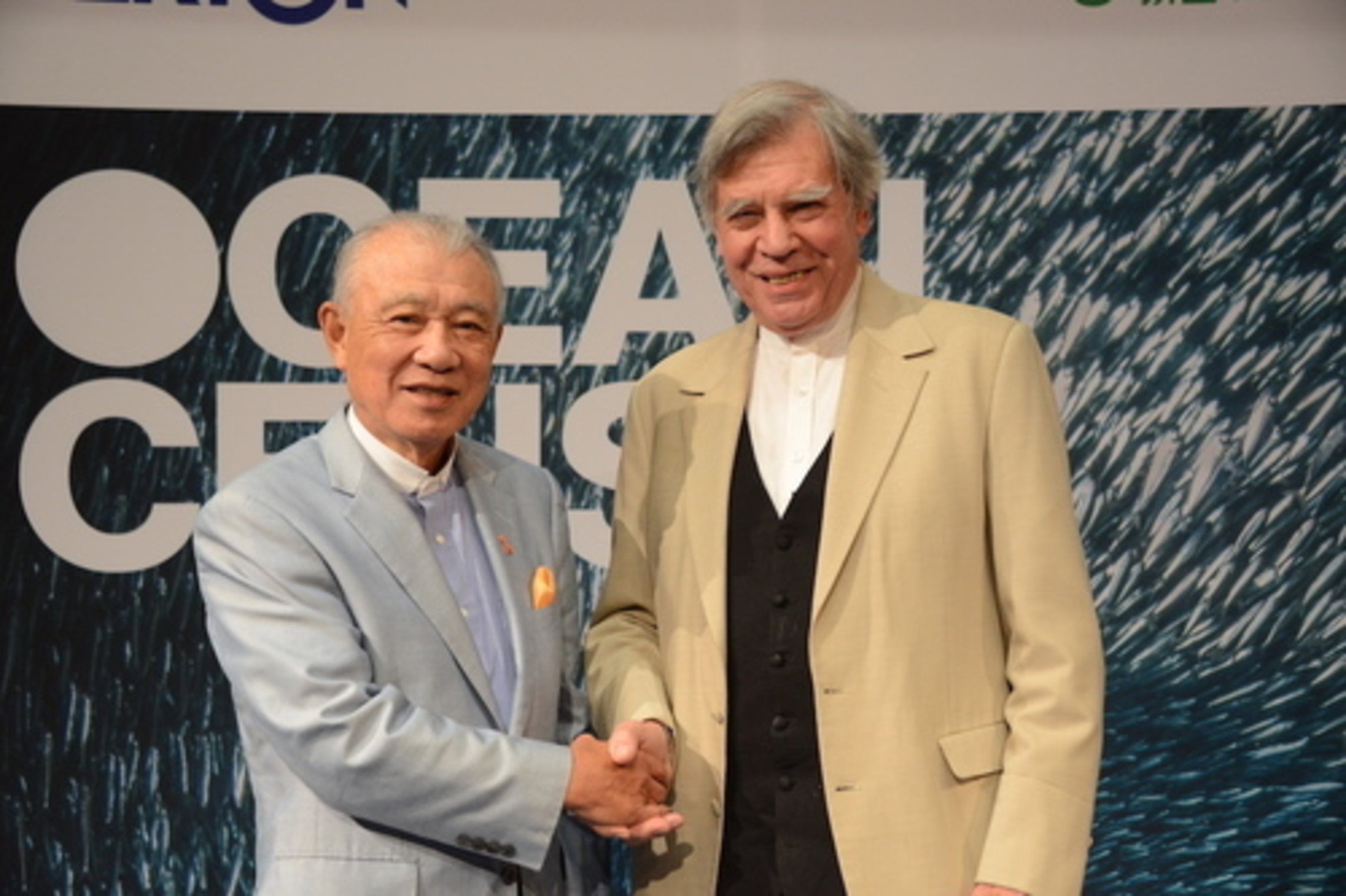
At an event at the Royal Institution in London on April 27, I made the announcement alongside Nekton chairman Rupert Grey that the project, called The Nippon Foundation-Nekton Ocean Census, has set the ambitious target of finding at least 100,000 new marine species in the first decade.
Scientists believe little more than 10% of the species that live in our seas have been found and that around two million remain undiscovered.
For the past 200 years, the work of finding and scientifically describing species, known as taxonomy, has been slow and methodical-the average rate of new species discoveries has changed little since the 1800s, at around 2,000 a year.
The Ocean Census scientists believe that traditional taxonomy is not up to the challenges of the climate and biodiversity crises, which are predicted to result in the loss of the majority of species on Earth.
Professor Alex Rogers, Ocean Census science director, noted: “Revolutions in technologies such as digital imaging, sequencing and machine learning, now make it possible to discover ocean life at speed and at scale.”
“It currently takes one to two years to several decades to describe a new species after it is collected by scientists, but utilizing new technologies and sharing the knowledge gained using cloud-based approaches, it will now only take a few months,” he added.
Over the coming years, Ocean Census scientists will embark on dozens of expeditions to the ocean’s biodiversity hotspots to seek out new life from the surface to the ocean floor. Combining vessels from philanthropic, government and commercial fleets, they will be deploying a combination of advanced subsea technologies with divers, submarines and deep-sea robots.
For the initial year, The Nippon Foundation will provide $4 million dollars to finance Ocean Census activities.
The project will be headquartered in Oxford, where the University Museum of Natural History is home to specimen finds dating back to the time of Charles Darwin (1809-1882), whose theory of evolution is the basis of much of our understanding of the so-called “tree of life” on Earth.
Species discovered on expeditions will be sent for high-resolution imaging and DNA sequencing in a network of Ocean Census biodiversity centers to be established in high-, middle-, and low-income nations around the world.
A key aim of the project is to grow and diversify the global network of taxonomists, which to date has been concentrated in high-income countries. To support this, networks of taxonomists will connect virtually to annotate “Digital Life Forms” to complete species descriptions.
The aggregated, open-sourced data will be added to a network of data centers globally and made freely accessible to scientists, decision makers, and the public.
I believe that inspiring the public is fundamental to success and science has to join forces with business and civil society to make real change happen through a collaborative worldwide effort.
(To be continued)