
Ethnic Armed Groups in Myanmar Endorse The Nippon Foundation’s Peace, Humanitarian Initiatives: Joint Statement (2)

Aside from the assistance The Nippon Foundation has provided in areas of Myanmar controlled by seven ethnic armed organizations (EAOs), namely in Kachin, Karen, Mon and Shan states, I would like to report to those who made donations to The Nippon Foundation that we have also provided humanitarian assistance to create stable living conditions for about 373 displaced people from 92 households who were returning to Chin State from India where they had fled to escape armed conflict.
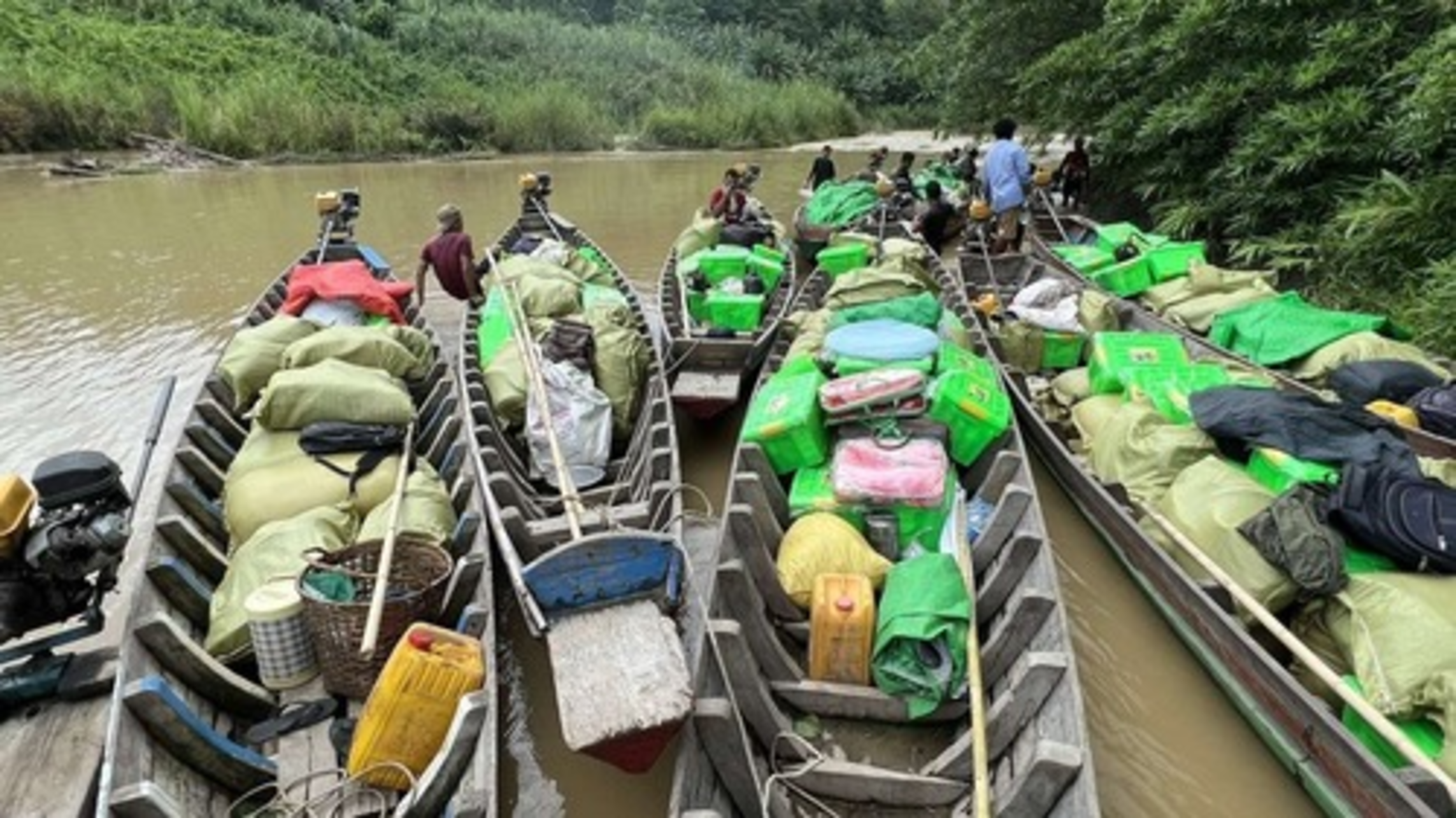
As part of the assistance, though small in scale, in late July we completed and repaired 50 houses and provided families with rice, oil, salt, beans and canned foods as well as daily necessities such as detergent, toothbrushes, towels and underwear.
Transporting and delivering these supplies by truck, boat and on foot proved a real challenge.
There are hundreds of thousands of internally displaced persons (IDPs) in Myanmar and there is a limit to what the foundation can do in distributing humanitarian assistance in the conflict-stricken nation.
But the foundation’s staff based in the country, while mindful of their own safety, are working with a strong sense of mission in the face of increasing challenges posed by the serious food shortages in EAO-controlled areas and the political crisis in the wake of the military takeover in February 2021.
In Bangladesh, more than 700,000 Rohingya refugees-or even as many as 1 million, according to some experts-from the western Myanmar state of Rakhine are taking refuge at the Cox’s Bazar camp.
In late June this year, The Nippon Foundation, collaborating with BRAC, an NGO based in the capital of Dhaka, completed building 203 two-story prefabricated movable steel structures with restrooms at the camp to be used as for schooling and vocational training. The 230 million yen (about $1.58 million) project ensures learning opportunities for 16,000 children a year.
It took three years to complete the structures after I decided to launch the project following my visit to the Cox’s Bazar camp in 2019 as Special Envoy of the Government of Japan for National Reconciliation in Myanmar and Chairman of The Nippon Foundation. I found the situation there to be much more serious than I had thought-worse, in fact, than any other refugee camp I have visited, including those in Jordan (home to Syrian refugees), Sri Lanka and East Timor.
The Bangladeshi government had been quite reluctant to approve construction of buildings at the camp by international organizations and western countries for fear of making the refugee situation there permanent.
But in the end it went along with our project, which envisaged constructing movable steel structures designed for temporary use by refugees. I sincerely hope that the displaced children will benefit from these facilities and be able to continue their studies if and when they ever return to Myanmar.
(End)


