
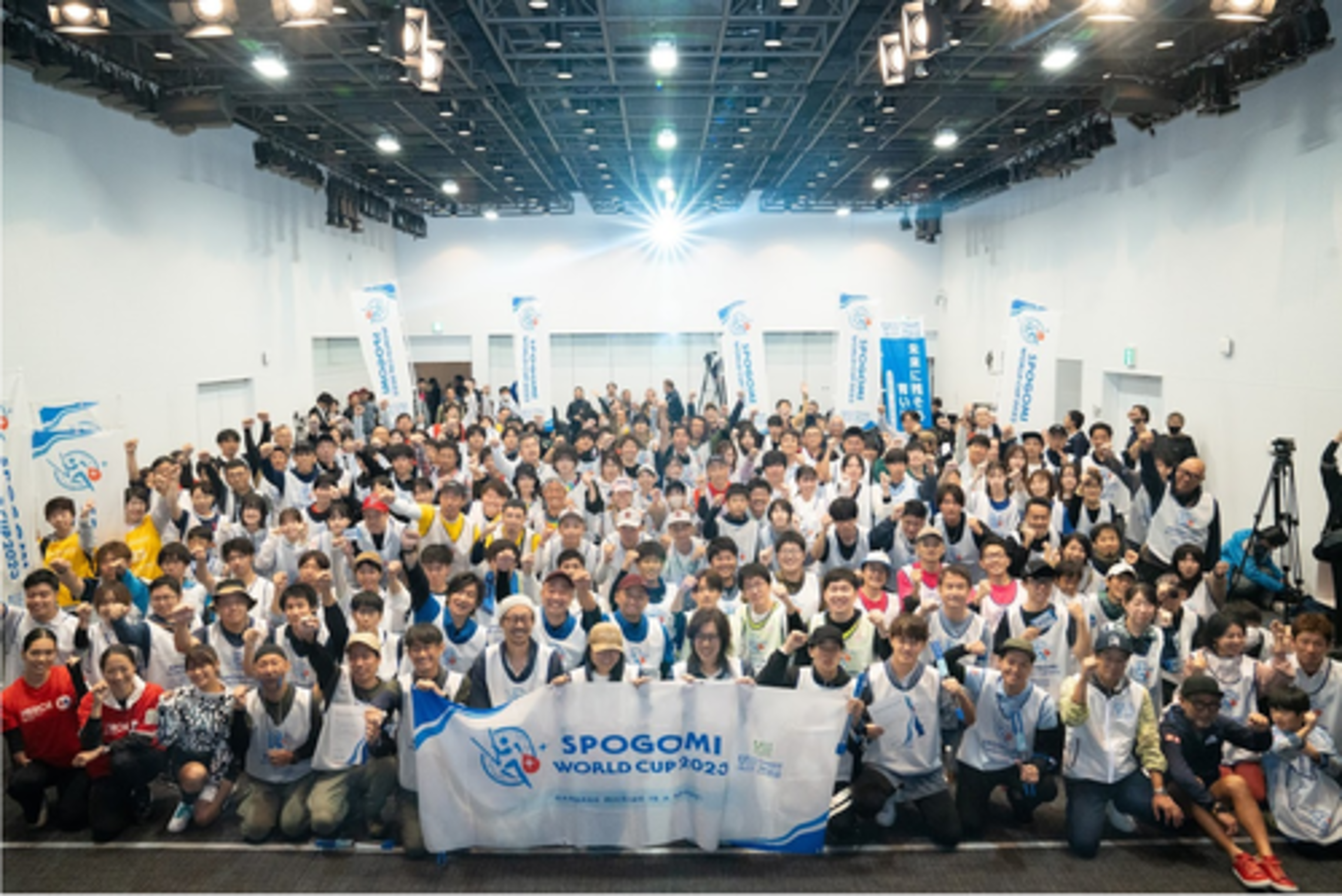
Inaugural ”SpoGomi” World Cup to Be Held in Tokyo on November 22 (2)

To select a national team to participate in the first-ever “SpoGomi” World Cup that The Nippon Foundation will host in Tokyo on November 22, qualifying rounds were held in 21 countries around the world starting in March this year.
In Thailand, representatives from 60 teams participated in the contest held at Siam Paragon, a huge shopping mall in central Bangkok on July 2. The winners were the three-member MJ Team that collected 17.7 kilograms of garbage, earning the highest score of 2,572 points based on the amount and type of trash they picked up.
The Bangkok Post quoted the team leader, Mr. Parkpoom Cholpilaiponk, as saying: "Normally, we already acknowledge that Siam Piwat (a chief local organizer of the event) has environmental activities and has good waste management. Organizing a garbage-picking sport is another activity that makes it easier for people to access waste sorting and helps raise awareness for people to pay more attention to waste segregation."
From India, three youngsters from Chennai will compete at the World Cup after beating 28 other teams from various cities in the qualifying round on the sands of Besant Nagar beach in Chennai held on July 9.
Waste segregation was the biggest challenge for the team. “We had strategized on how to go about it. Our focus was on first collecting as much litter as we could, with special emphasis on glass bottles that carried maximum points (a local rule in India),” Mr. Madhusudhan Radha Thanikasalam, a member of the trio, was quoted by the Hindu Times.
The three collected 80 kilograms of waste with glass alone weighing 35 kilograms, scoring 6,500 points, way ahead of their nearest rivals, who scored 2,800 points.
While the SpoGomi litter-picking method is the same the world over, different countries have their own household trash sorting criteria and public trash collection systems.
Nikhil Ravikumar, CEO of Cirqt, chief organizer for the event in India, said they made a few modifications to the competition. “As getting permission to organize the event on the streets is difficult, we choose the sands of the beach where such a practice already exists. The original competition gives more weightage to collection of cigarette butts, but we treated it as regular trash.”
In Vietnam, sorting trash is not routine, and the competitors had to consult the rule book to sort the waste they collected. Before taking part in SpoGomi, many of them said they had never realized that certain types of waste are recyclable resources.
In soccer-crazy Brazil, media outlets reporting on the SpoGomi World Cup never failed to mention how Japanese sports fans have impressed the world by picking up trash at World Cup and Olympic stadiums. They encouraged Brazilians to emulate this positive element of Japanese culture and join the SpoGomi competition.
At the Japanese elimination round in Tokyo on October 9, Mr. Mitsuyuki Unno, Executive Director of The Nippon Foundation, said that when teams from around the world gather in Tokyo to collect litter in the SpoGomi World Cup, and people back home see them on TV and social networking sites, it will raise their awareness of the ocean debris issue and hopefully encourage them to take action themselves.
Goal 14 of the United Nations Sustainable Development Goals (SDGs) calls on member states to conserve and sustainably use the oceans, seas and marine resources for sustainable development by preventing and significantly reducing by 2025 marine pollution of all kinds, in particular from land-based activities, including marine debris and nutrient pollution.
According to numerous experts, 70% to 80% of ocean debris originates from cities and towns, so reducing litter on land is essential to preventing marine debris from accumulating. Reducing everyday trash will not only make towns and cities cleaner, it will also make the oceans cleaner.
I sincerely hope that by hosting this world-class tournament, Japan will become the starting point of a global campaign aimed at creating garbage-free cities, rivers and oceans.
(End)