
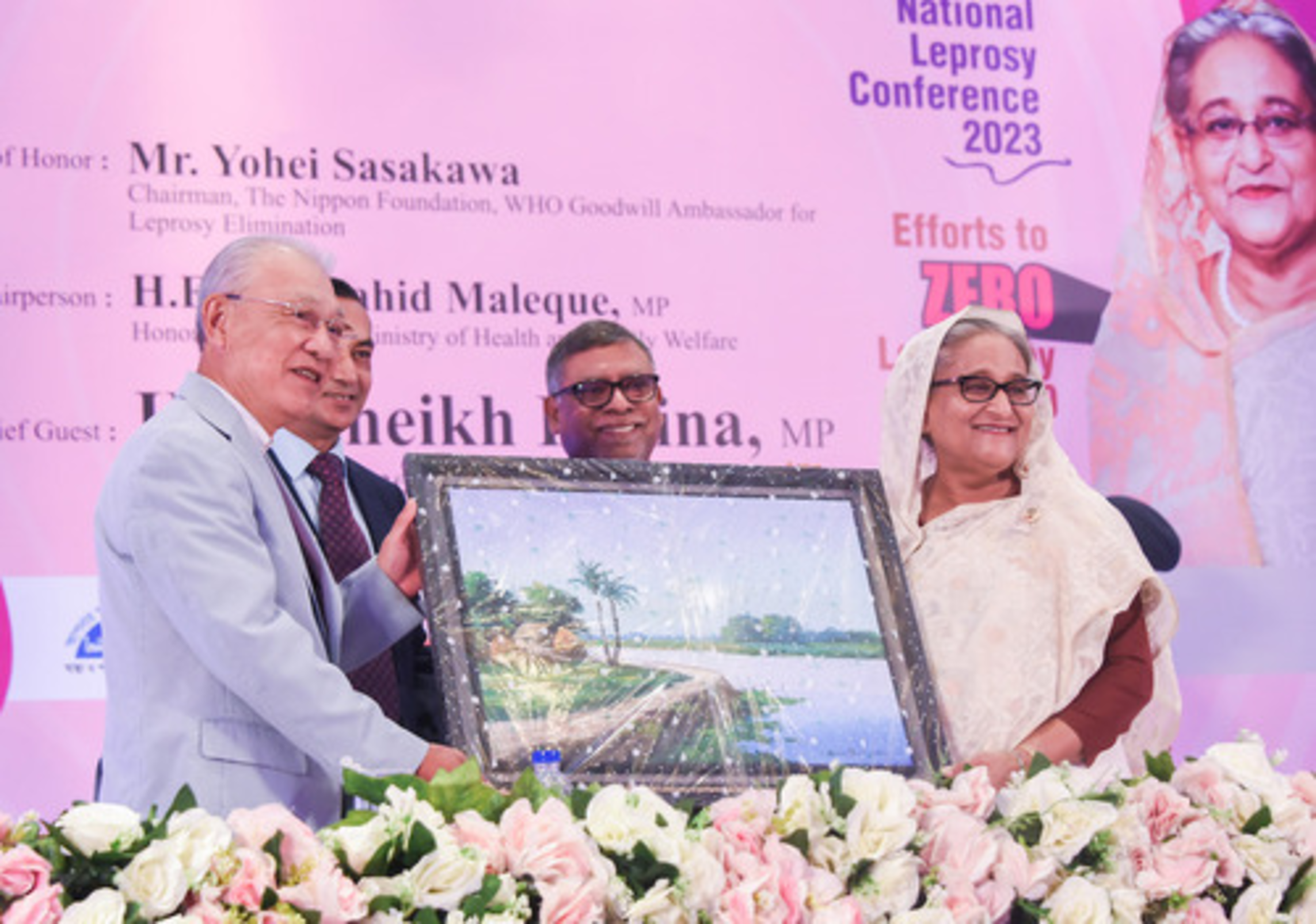
Bangladesh Prime Minister Hasina Vows Anew to Achieve “Zero Leprosy” by 2030 (2)

At the first National Leprosy Conference in 2019, Bangladesh Prime Minister Sheikh Hasina announced the Zero Leprosy Initiative aimed at eliminating leprosy in Bangladesh by 2030.
However, leprosy control programs in Bangladesh and many other countries were disrupted by the coronavirus pandemic, resulting in delays in diagnosis, treatment and wound care.
In 2022, Bangladesh reported 2,988 cases, the fifth highest in the world. It remains one of 23 WHO priority countries for leprosy, which together account for 95% of new cases each year.
This led me, on a visit to Dhaka in September this year, to invite Prime Minister Hasina to attend the second National Leprosy Conference, believing that her presence would mean a great deal to persons affected by leprosy, not only in Bangladesh but around the world. Despite her busy schedule ahead of next year’s general election in January, she accepted my invitation.
The prime minister’s renewed commitment to zero leprosy has already given fresh momentum to the country’s anti-leprosy drive, with officials of the Ministry of Health and Family Welfare preparing to seek a significant increase in the necessary budget.
I also hope that her attendance at the forum will have encouraged local health workers, medical professionals and organizations of persons affected by leprosy in rural and remote areas to be more active in their quest for a zero-leprosy Bangladesh by 2030.
I have traveled to more than 120 countries to urge heads of state to cooperate in leprosy elimination activities. To date, no other leader has set such a bold goal for leprosy.
It is encouraging to note that Bangladesh’s Zero Leprosy Initiative, under the strong leadership of the prime minister, appears to be having a significant impact on other endemic countries.
For example, Brazil, the country with the second highest number of new cases after India, will host a national conference on Hansen’s disease next year (not November 2023 as once envisioned), with the participation of President Inácio Lula da Silva. In Africa, meanwhile, Ethiopia is also planning to hold a similar conference in 2024.
I sincerely hope that the second National Leprosy Conference in Bangladesh has provided a timely opportunity for all stakeholders to reaffirm the goal of achieving zero leprosy by 2030 and to set out the actions that need to be taken.
As WHO Goodwill Ambassador for Leprosy Elimination, I will spare no effort to help Bangladesh and other endemic countries in their fight against the disease in my quest for a leprosy-free world.
(End)
