
The Nippon Foundation, WHO Jointly Launch Global Appeal 2024 to End Stigma and Discrimination Against Persons Affected by Leprosy (1)
-thumbnail2.jpg)
On the first leg of my 17-day tour of Europe and Africa, I visited Geneva to attend a ceremony on January 31 to jointly launch the Global Appeal 2024 to End Stigma and Discrimination Against Persons Affected by Leprosy, with WHO Director-General Dr. Tedros Adhanom Ghebreyesus.
The 19th annual appeal called on people to learn the facts about leprosy, also known as Hansen’s disease, share accurate information and create a world where no one is left behind because of a treatable disease.
“Let us break the chains of discrimination, work toward a leprosy-free world, and ensure dignity and care for everyone affected by this disease,” the appeal said. The ceremony was organized by WHO and Sasakawa Leprosy (Hansen’s Disease) Initiative.
The appeal that I initiated in 2006 is issued on or near World Leprosy Day, which falls on the last Sunday of January. It calls for an end to the unwarranted discrimination that persons affected by leprosy continue to face and aims to spread awareness of this issue.
Over the years, this appeal has been endorsed by influential individuals or organizations around the world. To date, the list of supporters includes Nobel Peace Prize laureates, the International Bar Association, the World Medical Association and the Inter-Parliamentary Union. This year, the WHO has joined the list.
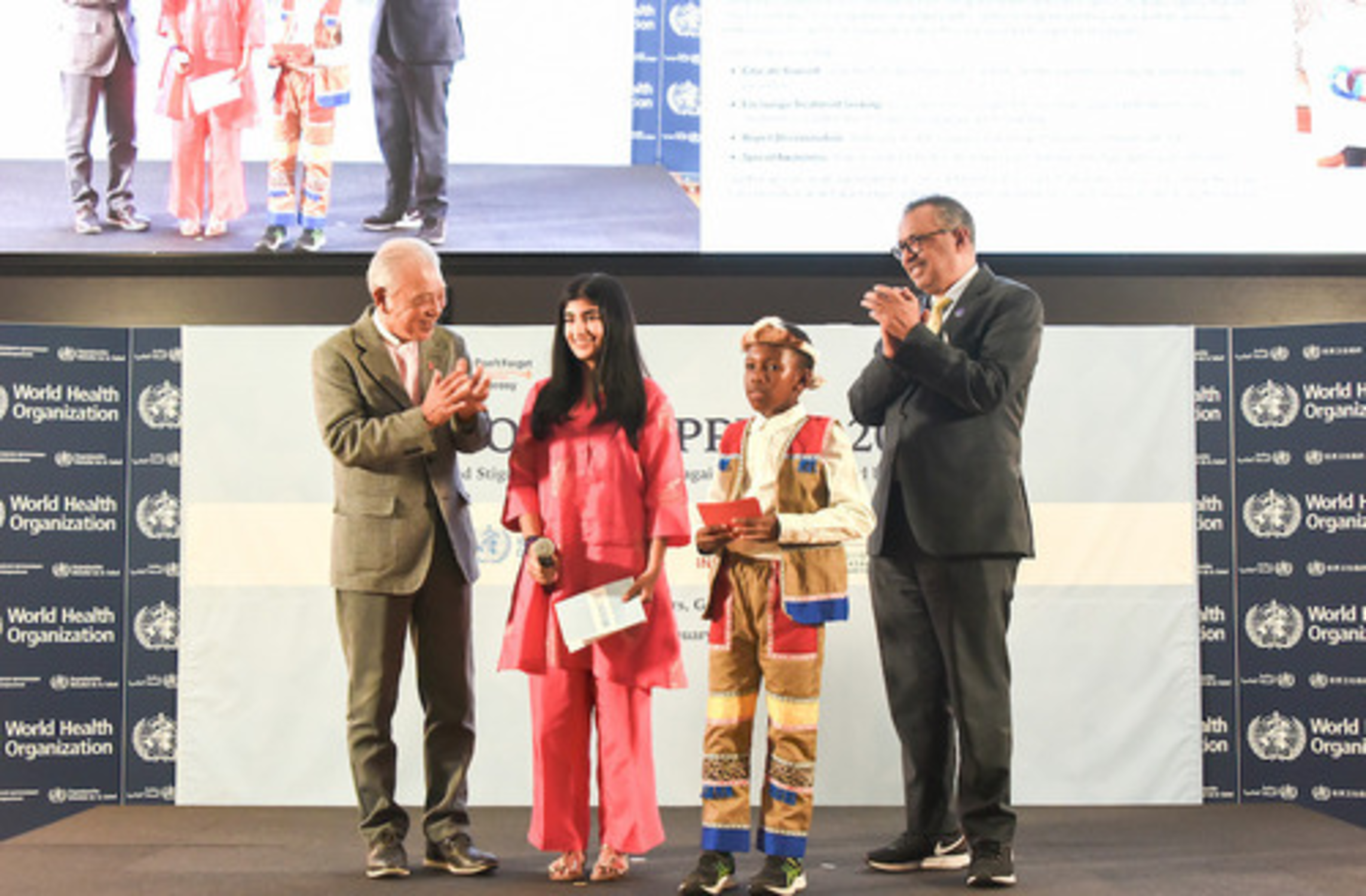
At the launch ceremony at WHO headquarters, the appeal was read out by Ms. Anushka Sarna from India and Mr. Ahlula Moyo from South Africa, children of WHO staff members based in Geneva.
The event began with a Stradivarius Mini-Concert featuring outstanding young violinists Ms. Rino Yoshimoto from Japan and Mr. Giuseppe Gibonni from Italy. They both played Stradivarius instruments on loan from the Nippon Music Foundation, The Nippon Foundation’s partner organization, which owns 21 instruments made by Antonio Stradivari and Bartolomeo Giuseppe Guarneri del Gesù and loans them free of charge to promising young musicians and those active internationally, regardless of nationality.
In a video message for the ceremony, Dr. Beatriz Miranda Galarza, the new UN Special Rapporteur on the elimination of discrimination against persons affected by leprosy, noted there are some 200,000 new cases of leprosy reported globally each year and millions of people living with disability due to leprosy, calling for establishing a system of support and care based on human rights.
"Guaranteeing access to a high-quality support and care system is not only a human rights obligation, but also a condition to ensure the elimination of discrimination against persons affected by leprosy and their families," she said.
Dr. Roderico H. Ofrin, the WHO Representative in India, which reports the highest number of cases in the world, said in his video message that India's five-year National Strategic Plan and Roadmap for Leprosy, launched in 2023, prioritizes combating stigma and ensuring the protection of the human rights of persons affected by leprosy.
A critical component of this plan is to repeal all remaining discriminatory laws at the national and sub-national levels, he said, and it also includes the provision of psychological care and counselling to promote mental health.
(To be continued)


