
The Nippon Foundation Going All Out Delivering Emergency Supplies to Quake-Hit People on Noto Peninsula, Receives 747 Million Yen in Donations (1)

Since a powerful 7.6 magnitude earthquake struck on the Noto Peninsula in central Japan on New Year’s Day, The Nippon Foundation has been doing its utmost to deliver emergency supplies and engage in cleanup and recovery operations in the hardest-hit areas.
At the same time, it has been accepting donations from the general public to its Special Fund for Disaster Preparedness to support affected people in the areas on the Sea of Japan coast as well as NGOs and volunteer organizations helping them.
As of February 19, the foundation has received a total of 746,600,314 yen (about 4,970,000) from 140,247 donors. The total included funds donated via the internet through Japanese web services provider Yahoo! Japan and flea market app operator Mercari Inc. as well as through Love Pocket Fund, jointly established by The Nippon Foundation and three former members of the iconic boy band SMAP-Messrs. Tsuyoshi Kusanagi, Goro Inagaki and Shingo Katori.
Among the donors was Mr. Masahiro Nakai, the former leader of SMAP and now one of Japan’s most popular television hosts, who contributed 30 million yen (about $200,000) to the special fund in addition to the 50 million yen (about $333,000) his former bandmates donated earlier for the relief efforts.
I would like to express my sincere appreciation for all the generous donations made to help people affected by the earthquake.
Donations received from January 1 to March 31, 2024, are being used as a special fund to provide immediate emergency relief to the disaster areas on the Noto Peninsula.
Emergency supplies The Nippon Foundation has delivered to community centers, evacuation shelters and medical facilities in the affected areas by land and sea included 10 large-scale power generators (100V/200V: 25kVA~60kVA), 4,000 liters of kerosene for heating use, 2,000 liters of diesel fuel for trucks and power generators, 20 large steel plates for enabling vehicles to traverse rough terrain, and portable reusable water systems such as 100 free-standing shower kits and 200 hand-washing sinks.
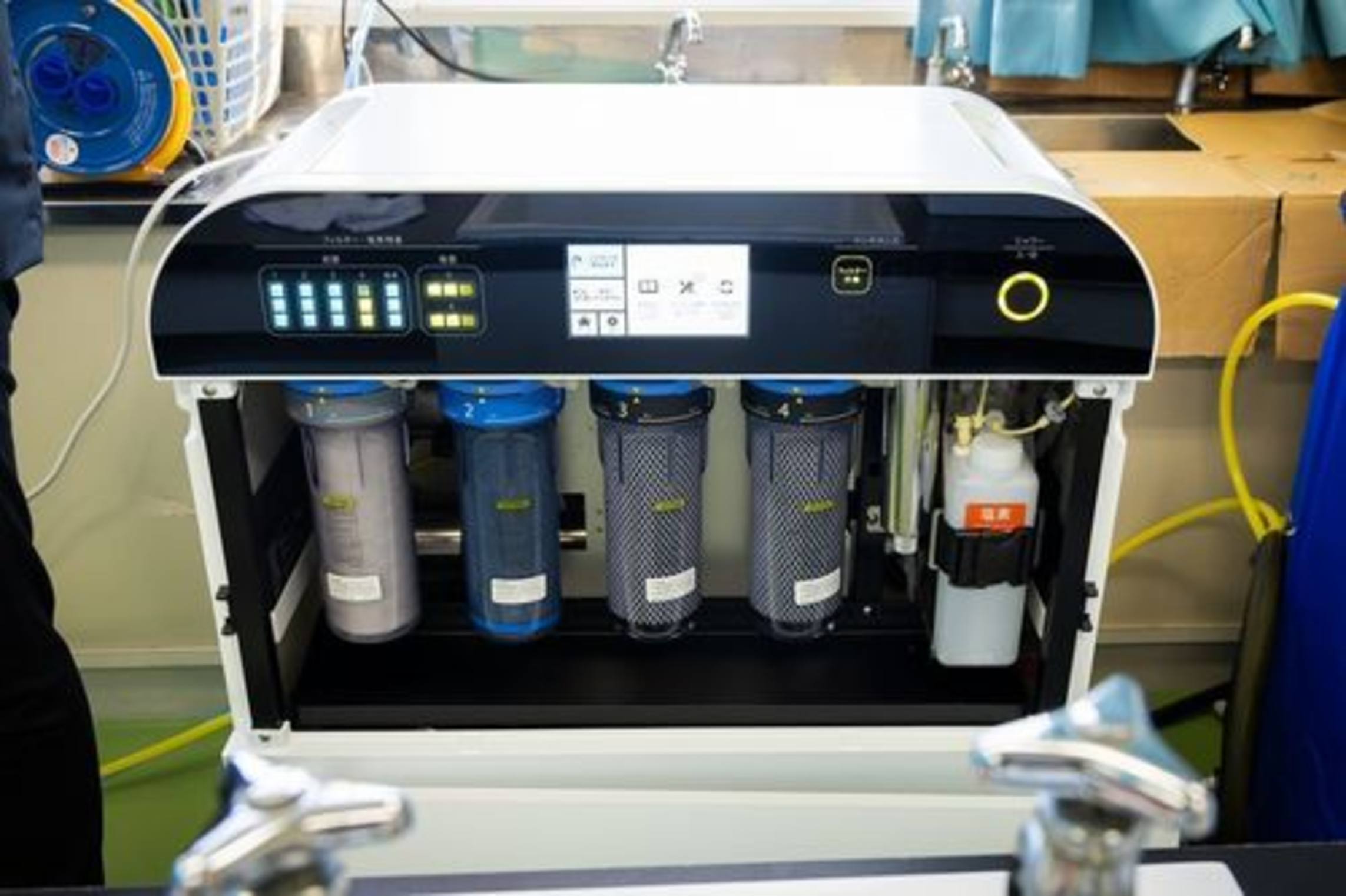
The shower kits and sinks, manufactured by WOTA Corp. of Tokyo, are self-contained systems that can filter and reuse water multiple times at evacuation centers where water supplies have been cut off. Their cutting-edge, automated water treatment control enables evacuees to reuse more than 98% of the water they use, the company said.
Mr. Mitsuyuki Unno, executive director of the Nippon Foundation, said: “While consulting with local authorities and conducting relief activities, we have come to know that we needed to help improve the quality of life for evacuees.”
The foundation worked with WOTA to procure 100 of the shower kits, dubbed WOTA BOX, from across the country, he said. Of these, 30 each were installed in evacuation centers in Suzu and Wajima, and seven each in the municipalities of Nanao, Noto, Shika and Anamizu. The remaining 12 were set up at medical facilities that needed them.
Between January 10 and February 7, The Nippon Foundation chartered the 462-ton RORO (Roll-on/roll-off) cargo ship “Aguni” to transport emergency supplies by sea, with the vessel sailing almost every day between Kanazawa Port in the prefectural capital and Suzu and Wajima cities on the northern tip of the peninsula where the damage was most severe.
Given that roads were extensively damaged on the peninsula, hindering the work of rescue services, the foundation decided to transport emergency goods by sea in consultation with the Ministry of Land, Infrastructure, Transport and Tourism and local governments.
(To be continued)


