
The Nippon Foundation Hosts the Third Asia Philanthropy Congress in Tokyo Under Theme of “Diversity, Equity and Inclusion” (2)
Published on December 27, 2024

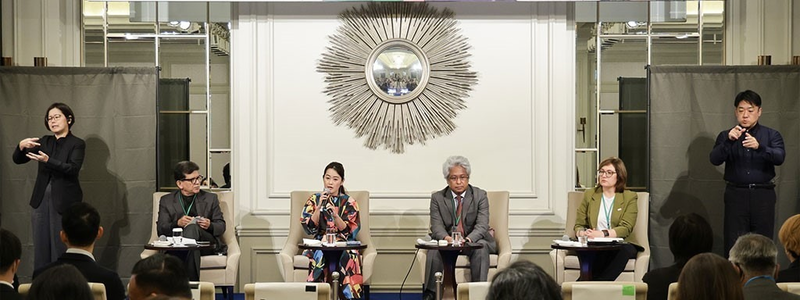
The second plenary session of the Asia Philanthropy Congress 2024 that The Nippon Foundation hosted in Tokyo on November 29 was a panel discussion on the subject of “Unlocking Diversity, Equity and Inclusion (DEI) through Strategic Social Investment and Collaborative Synergies.”
Moderated by Dr. Hossain Zillur Rahman, chairperson of the BRAC Governing Body and a leading policy advisor in Bangladesh, the session featured panelists Ms. Marie Oshioka, Chief Operating Officer (COO) of Heralbony, a Japanese company that manages the property rights of artists with disabilities, Mr. Satoshi Ikeda, chief sustainable finance officer and director of the Strategy Development Division of Japan’s Financial Services Agency, and Ms. Tatjana Gerling, Ambassador for Japan of the 2X Global network.
Ms. Oshioka explained that Heralbony has combined an intellectual property business with social welfare. While there are many NGOs and other organizations that work with artists with disabilities, she said, Heralbony takes one step further by licensing and promoting their works and paying royalties back to the artists.
Mr. Ikeda discussed the role that Japan’s Stewardship Code and Corporate Governance Code have played in raising awareness of ESG and DEI as strategic matters that allow companies to adapt to a changing world.
Ms. Gerling gave an overview of 2X Global, a global platform of more than 150 financial institutions that makes a business case for investing in women and investing through a gender lens. One of the groups that the platform looks to engage is highly educated women, who represent a major resource but whose economic contribution as highly qualified professionals in society tends to decrease after they become mothers, she added.
Common themes that emerged during the discussion included the fact that philanthropic organizations are able to play a leading, unique role in promoting DEI by being able to take on risk without needing to focus on short-term returns, and that inclusion is a strategic mindset that creates win-win outcomes. In addition, building networks or platforms to increase scale is important for attracting cooperation from governments and private-sector companies.
Dr. Rahman concluded the session with the observations that philanthropic organizations can have an important function in promoting DEI because of their agility and ability to play a catalytic role, and that Asia has the experiences to be a leader in this area. It is also important to focus on “last mile” specific outcomes, and to rethink the idea of efficiency by incorporating a social angle, he said.
(End)