
Japanese Fishermen, Researchers Joining Hands to Collect, Analyze Vital Data on Oceanic Changes
Published on February 28, 2025

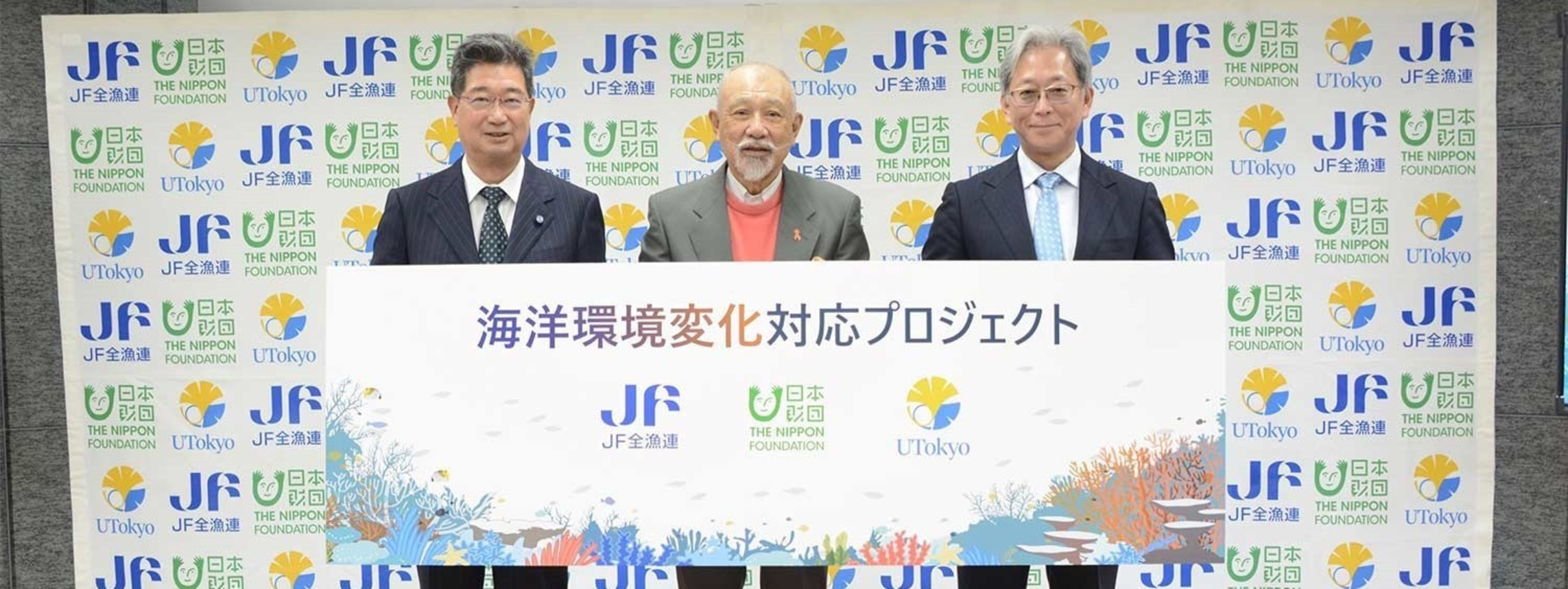
At the initiative of The Nippon Foundation, Japanese fishermen and top university researchers are joining forces to collect and analyze vital data on rising sea temperatures and other changes in the oceanic environment with an eye to addressing the country’s dwindling fisheries catches.
I announced this at a press conference in Tokyo on January 20 jointly with Chairman Masanobu Sakamoto of the National Federation of Fisheries Cooperative Associations (JF) and Director Susumu Hyodo of the University of Tokyo’s Atmosphere and Ocean Research Institute.
This is the first nationwide joint project by Japanese fishermen and top researchers to investigate changes in the marine environment of the nation’s coastal areas.
Starting in April, young fishermen from local fishery cooperatives in 12 of Japan’s 47 prefectures, including northernmost Hokkaido and southernmost Okinawa, will collect data on rising sea temperatures, salinity, changes in ocean currents and other oceanic changes as well as their fisheries catches. The number of participating prefectures is expected to go up to about 20 in the near future.
The fishermen will send the data to researchers at the prestigious institute, who will use cutting-edge technology to analyze the data to see what is actually happening in Japan’s coastal waters and why, and how fishermen can and should respond.
Speaking at the press conference, JF Chairman Sakamoto underscored the “sense of crisis” among fishermen over their dwindling catches amid the recent changes in the ocean, but noted that up until now they have had no idea where to turn for advice.
Mr. Tomokazu Kawabata, chairman of the JF National Fisheries Cooperative Youth Division, representing young fishermen participating in the survey, said: "I have felt that the seas off the coast of Japan are changing at an incredible pace, but until now there have been no concrete scientific figures available. As a fisherman who makes his livelihood by fishing in the sea, I want to work hard to ensure that we will leave behind a bountiful ocean."
Director Hyodo said: "We will analyze data collected by fishermen that will contribute to a better understanding of what's happening under the sea and will come up with measures going forward."
According to the Agriculture, Forestry and Fisheries Ministry, the total volume of fish caught in Japan in 2023 fell 4.3% from the previous year to 2,823,400 tons. This volume has been constantly dropping since peaking at about 11.5 million tons in 1984.
In particular, catches of three popular kinds of fish have declined dramatically over the last decade. Japanese fishermen netted 60,000 tons of salmon in 2023, down from 147,000 tons in 2014, while catches of Pacific saury plummeted to 26,000 tons from 229,000 tons and flying squid to 20,000 tons from 173,000 tons.
The dwindling hauls by Japanese fishermen are attributed by experts to the warmer sea temperatures due to global warming and changes in the marine environment around the country.
I said at the press conference: “When it comes to understanding the ocean, which covers 70% of the Earth’s surface, I believe that, frankly, our progress has been slow. As Japan is surrounded and supported by the sea, we should pay more attention to the multifaceted problems facing the ocean. Under the project, young fishermen around Japan, guided by researchers’ scientific expertise, will conduct monitoring of the rising sea temperatures and other oceanic changes as they go fishing. I hope that they will pave the way for ensuring Japan’s food security by successfully managing fishery products that are essential to the Japanese diet.”
