
Sasakawa Africa Association Distributes Farm Inputs to 9,000 Smallholder Farmers in Nigeria (1)
Published on August 12, 2025

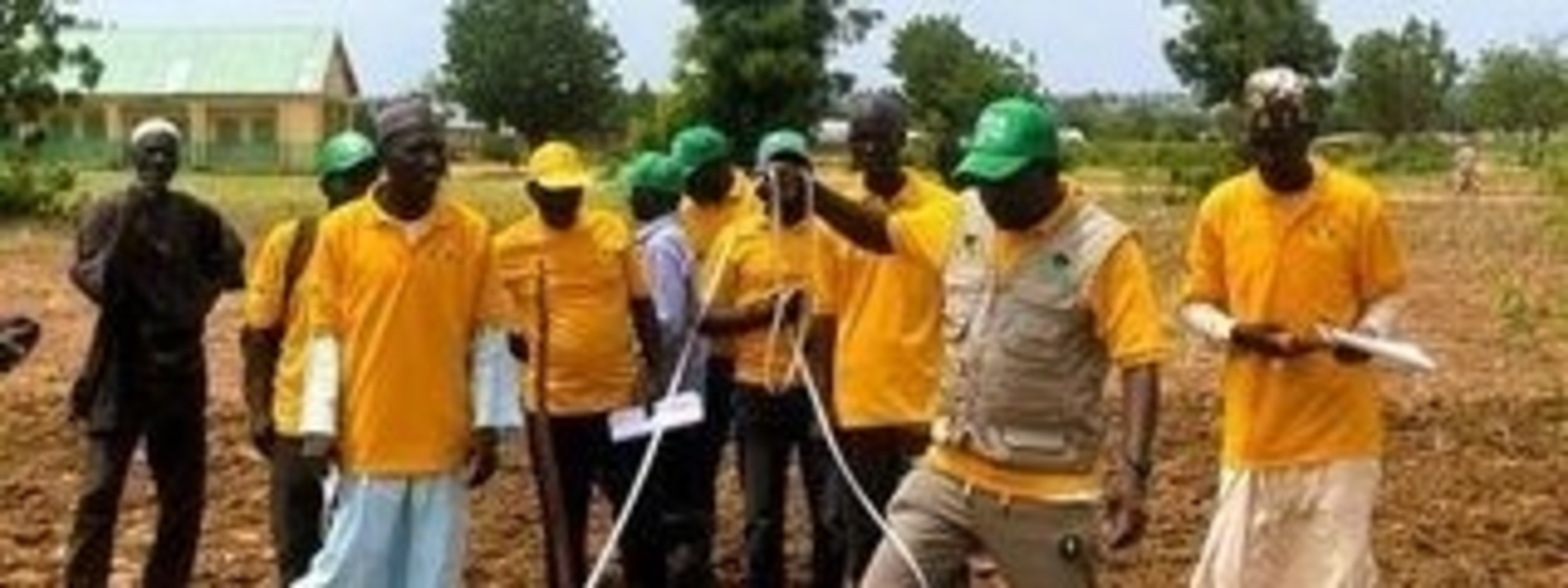
Sasakawa Africa Association (SAA) Nigeria has begun the distribution of farm inputs, including seeds, fertilizers and agrochemicals, to 9,000 smallholder farmers in six states in the West African nation.
The initiative, started in late June, marked the beginning of 2025 wet season farming activities in those states-Kano, Jigawa, Gombe, Nasarawa, Benue and Kwara. It aimed to bolster food security, increase household incomes and promote climate-smart farming practices among smallholder farmers.
A statement issued by SAA communication officer Mr. Moses Nongoatse said that an estimated 45,000 more farmers were to benefit indirectly through knowledge transfer and improved access to regenerative agriculture techniques.
Prior to the distribution, SAA Nigeria trained 116 frontline extension agents through a preseason “training-of-trainers program,” equipping them with skills to cascade regenerative agriculture and good agronomic practice to local farming communities.
Complementing the distribution, SAA has also established 360 community demonstration plots across 90 rural communities. These Farmer Learning Platforms (FLPs) serve as “living classrooms” to showcase a wide range of regenerative practices, such as intercropping, relay cropping, mulching, urea deep placement and integrated pest and weed management.
These demonstration plots are adapted to local agroecological contexts and designed to boost knowledge exchange and peer learning among farmers.
The statement quoted SAA Nigeria Country Director Dr. Godwin Atser as saying: “For more than 30 years, we have worked side by side with Nigeria’s smallholder farmers, delivering practical, field-tested innovations.”
“Our interventions have consistently improved yields, from 1.9 metric tons per hectare to 5.5 metric tons per hectare in maize, and from 1.8 metric tons per hectare to 6 metric tons per hectare in rice production. In the case of soybean and cowpea, yields have improved from 0.6 metric tons per hectare to 2.5 metric tons per hectare. This is a result of blending improved inputs with hands-on extension and community-based learning,” Mr. Atser said.
SAA was established in 1986 by former U.S. President Jimmy Carter, Nobel Laureate Dr. Norman Borlaug, and my late father Ryoichi Sasakawa, the founding chairman of The Nippon Foundation, in the wake of the devastating famine that ravaged the Horn of Africa in 1984-85.
Nigeria is one of the four focus countries along with Ethiopia, Mali and Uganda where SAA has country offices.
As a core donor, the foundation has provided over US$300 million in support of its programs-an unprecedented figure from a donor to a non-governmental organization (NGO) on a continuous basis.
(To be continued)
|