
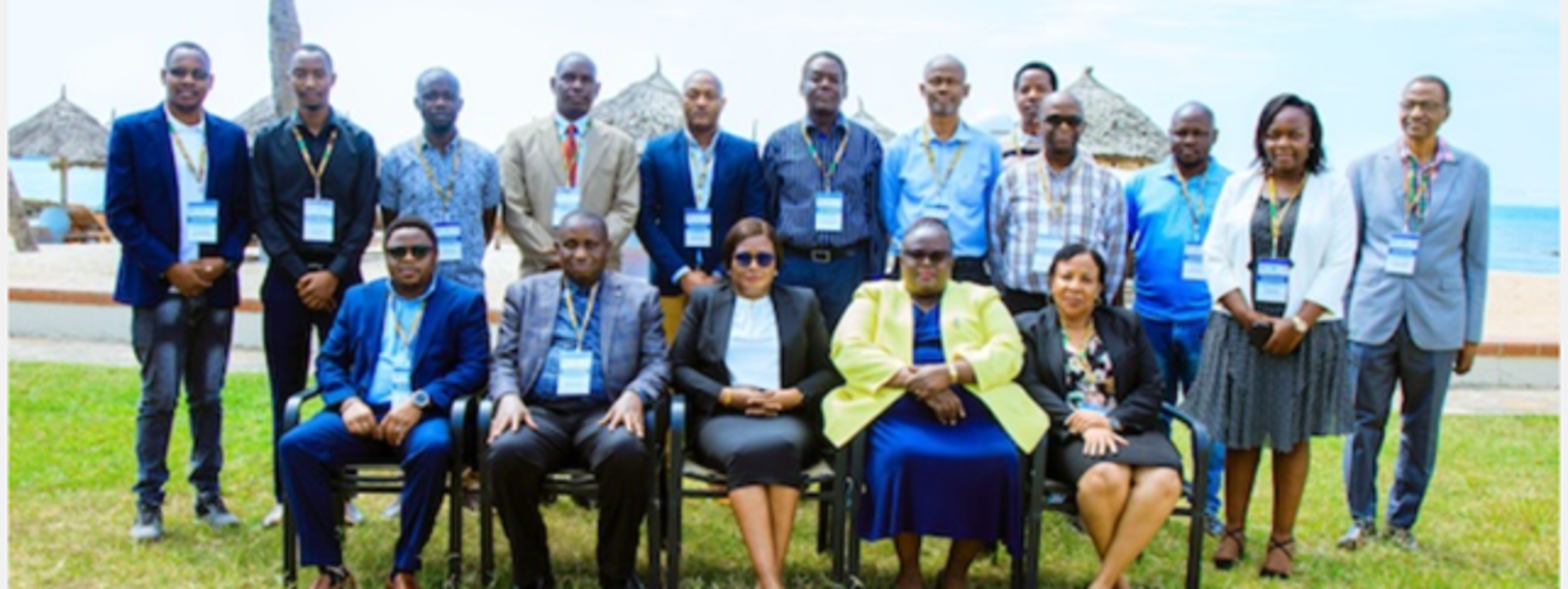
The Nippon Foundation-GEBCO Seabed 2030 Project Collaborates with the University of Dar es Salaam of Tanzania
Published on August 26, 2025

The Nippon Foundation-GEBCO Seabed 2030 Project has entered into a partnership with the University of Dar es Salaam of Tanzania, advancing the ambitious global initiative aimed at completing the mapping of the entire ocean floor by the end of the decade.
Renowned for academic excellence in marine science, the university, through its Institute of Marine Sciences (IMS) and School of Aquatic Sciences and Fisheries Technology (SOAF), has established itself as a regional hub for oceanographic research, hydrography and environmental stewardship.
With its multidisciplinary approach and longstanding expertise strengthened by years of dedicated research and training, it plays a central role in promoting marine science, conservation and capacity-building initiatives across the Western Indian Ocean region and beyond.
Seabed 2030 is a collaborative project between The Nippon Foundation and the General Bathymetric Chart of the Oceans (GEBCO), which seeks to inspire the complete mapping of the world’s ocean by 2030 and to compile all the data into the freely available GEBCO Ocean Map.
The project is formally endorsed as a Decade Action of the UN Ocean Decade. GEBCO is a joint program of the International Hydrographic Organization (IHO) and the Intergovernmental Oceanographic Commission (IOC), and is the only organization with a mandate to map the entire ocean floor.
Seabed 2030 Project Director Jamie McMichael-Phillips commented: “We are delighted to welcome the University of Dar es Salaam to the global Seabed 2030 network. Tanzania’s extensive and ecologically diverse marine territory offers significant potential to contribute to our shared vision of a fully mapped seafloor.”
“The university’s expertise and leadership in marine sciences are vital assets in accelerating our mission,” he added.
Professor William A. L. Anangisye, Vice Chancellor of the University of Dar es Salaam, reaffirmed the university’s commitment to advancing ocean sustainability, stating: “This collaboration with Seabed 2030 reflects the University of Dar es Salaam’s enduring dedication to advancing scientific research in support of ocean sustainability. Through the work of our Institute of Marine Sciences and hydrographic research teams, we reinforce Tanzania’s contribution to global ocean mapping efforts and generate insights essential for marine conservation, policy development and responsible resource management.”
With this latest partnership, more than 185 organizations worldwide now contribute data to Seabed 2030. The project will continue to galvanize global support toward a fully mapped ocean floor by the end of the decade.