|

What do you consider to be the main cause of global warming?
Japanese Prime Minister Yoshihide Suga has declared that Japan is aiming to cut greenhouse gas emissions to zero on a net basis to make it a carbon-neutral society by 2050. This has brought the country into line with a global movement initiated by the European Union (EU) and more than 120 nations.
To figure out how young people in Japan look at the issue, The Nippon Foundation conducted a nationwide online survey on the subject of “decarbonization” between January 12 and 17, 2021, covering 1,000 Japanese aged between 17 and 19.
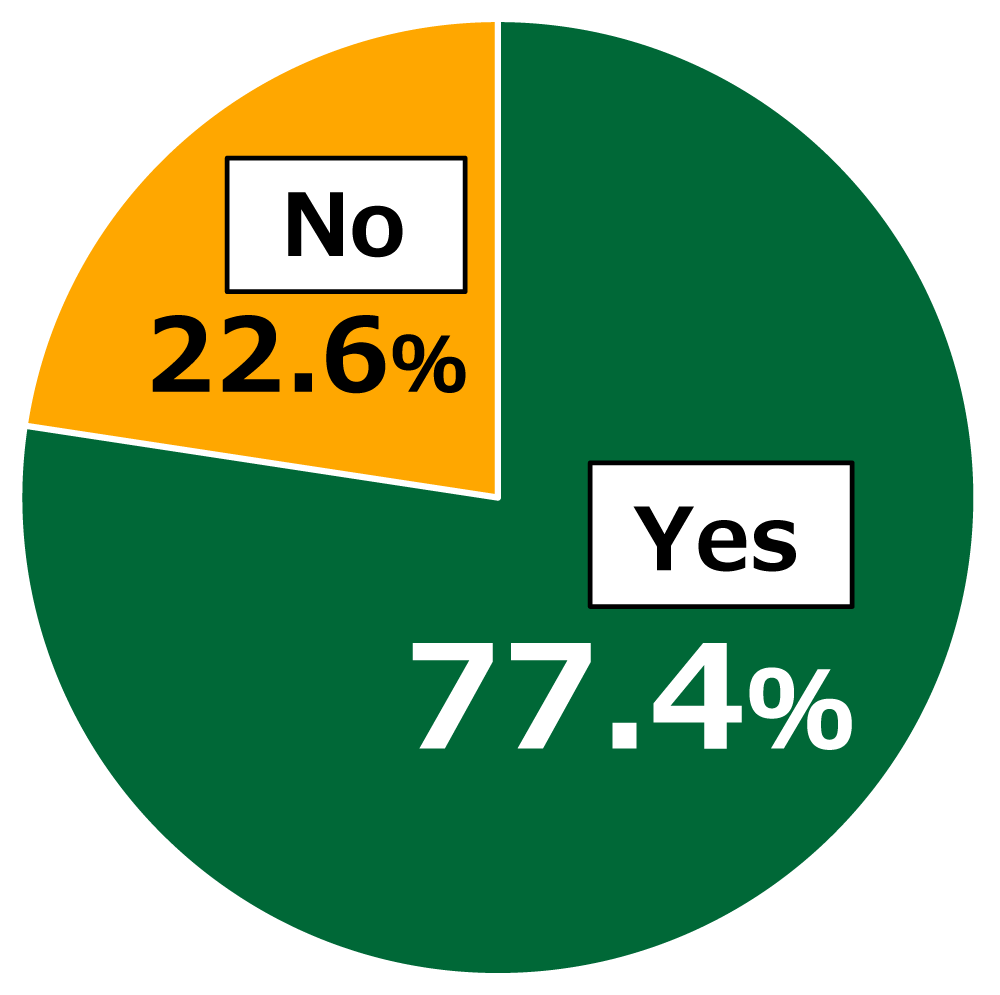
When asked about increasing natural disasters such as abnormally high temperatures, high tides, rising ocean temperatures, and severe storms that are said to be caused by global warming, almost four in five respondents (77.4%) said they are aware of the risks posed by global warming. This represented an increase of more than 10 percentage points over 67.0% in a similar poll about climate change carried out in December 2019.
The survey also showed that two in three young Japanese (66.7%) consider the main cause of global warming to be greenhouse gas emissions associated with human social activity.
Queried about the fact that Japan is the world’s fifth-largest emitter of carbon dioxide, more than seven in ten (73.0%) said Japan should reduce CO2 emissions while 15.7% said it is for social activity and therefore cannot be helped.
As for measures to reduce Japan’s CO2 emissions (multiple answers accepted), about two in three (66.0%) cited promotion of renewable energy development, followed by stepped-up development of electric vehicles and storage batteries (36.4%), and energy conservation efforts by households and business corporations (33.7%).
The poll found that over six in ten respondents (60.4%) said they approve of the Suga government’s goal of making Japan carbon neutral by 2050 while only one in ten (10.3%) do not.
But only one in seven (14.4%) said they consider the goal to be achievable while almost three in ten (29.3%) said they do not and about half (50.2%) said they do not know. As reasons, young Japanese expressed a variety of opinions, ranging from the positive-“It’s up to behavior of individuals” and “We have as long as 30 years” to the negative-“We might not be able to find alternative energy sources in time” and “CO2 emissions are unavoidable in industrial development.”
In announcing the goal of a carbon-neutral Japan by 2050 in his major policy speech in the Diet (Parliament) on January 18, Prime Minister Suga said measures to attain the target “are no longer constraints on economic growth,” adding: “Instead, they are the keys to transforming the industrial structure and producing robust growth by dramatically changing our economy and society, promoting investments, and enhancing productivity.”
Specifically, the government has worked out a long-term strategy to intensify research and development of renewable energy such as offshore wind power as well as carbon recycling technology featuring capturing and recycling carbon dioxide.
It is hard to imagine what the global environment will be like 30 years from now. Analyzing the findings of the survey, I reaffirmed the fact that it is crucially important for all of us, regardless of age, to make maximum efforts to pass on a healthy Earth to future generations.

An increase in unanticipated natural disasters including abnormally high temperatures, rising ocean temperatures, high tides, and severe storms is said to be caused by global warming. Are you aware of these risks posed by global warming?

Japan is the world’s fifth-largest emitter of CO2. What do you think about this?

Do you approve of the government’s pledge for Japan to become carbon neutral by 2050?

Do you consider the government’s pledge for Japan to become carbon neutral by 2050 to be achievable?
Yohei Sasakawa Blog
|