
The Nippon Foundation Establishes Schools to Train Prosthetics & Orthotics Professionals in Six Southeast Asian Countries
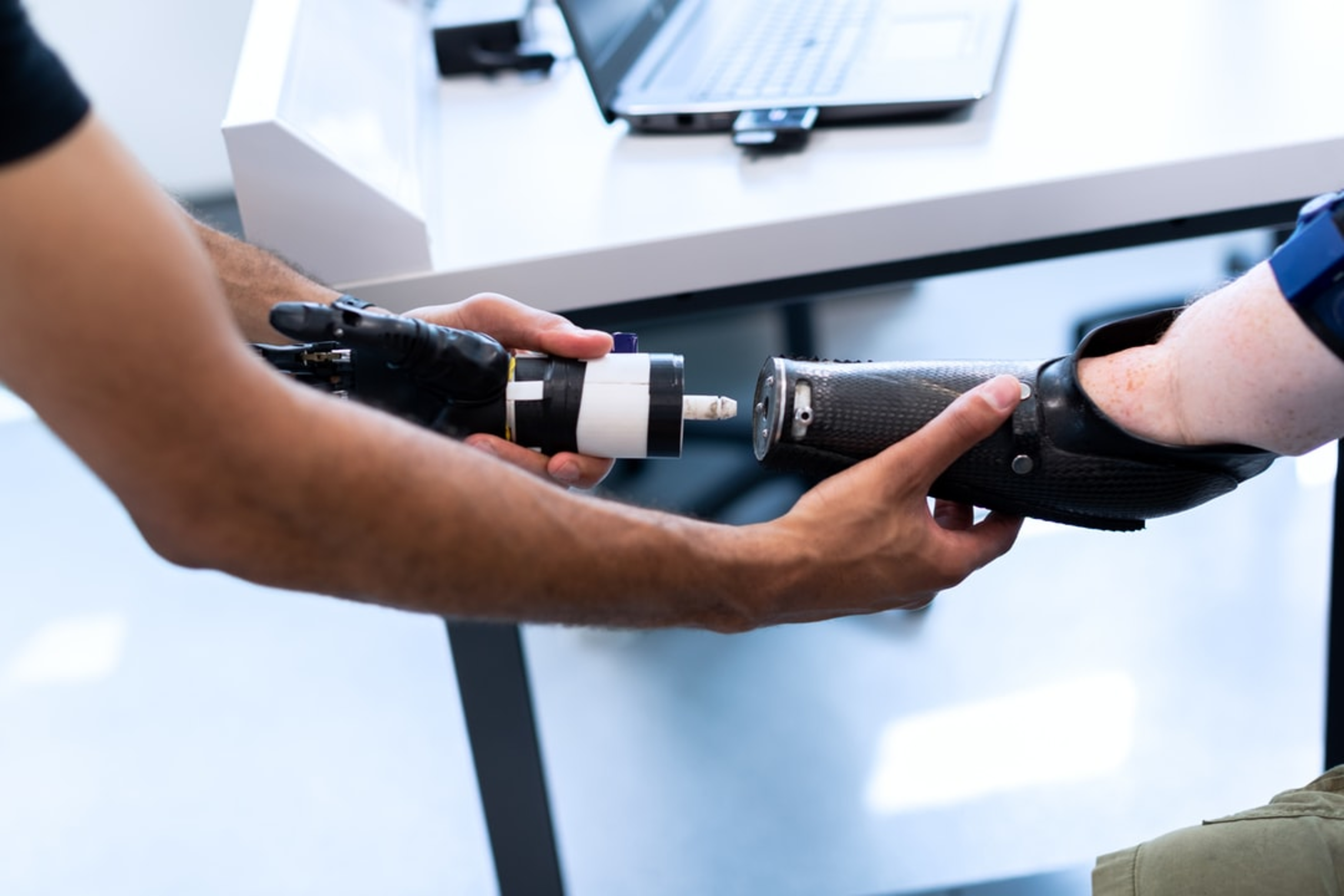
It has been three decades since The Nippon Foundation launched a project to establish schools to train prosthetics and orthotics professionals in Southeast Asian countries. A prosthesis is a replacement for a lost limb, while an orthosis is an external device used to support, correct or assist a limb.
Before we acted in 1991, there was not a single education and training institution in Southeast Asia that met the standards of the International Society for Prosthetics and Orthotics (ISPO).
We started in Cambodia. The Pol Pot regime’s brutal genocidal reign of terror resulted in the killing of hundreds of thousands of Cambodians in the late 1970s and many people lost limbs years later after coming into contact with landmines used in the internal conflicts.
Mr. Carson Harte, the Founder Director of Cambodia Trust (now Chief Executive of Exceed Worldwide), was scrambling to provide artificial limbs to those disabled people and called on The Nippon Foundation for urgent assistance.
Prosthetics and orthotics professionals assess clients, prescribe, design, fabricate, fit and maintain and monitor prostheses and orthoses as well as provide education to clients. Having a proper, customized prosthetic fine-tuning is paramount in capturing the exact shape of a client’s residual limb so as to guarantee an intimate socket fit.
I was reminded of how significant it was to undertake this project when I saw a Cambodian woman with a disability dance with joy when she first wore her just-completed prosthesis and orthosis.
Toward the end of the 26-year-long civil war in Sri Lanka, the foundation decided to establish a school to educate prosthetics and orthotics professionals locally. People in the capital of Colombo were touched to see young Sinhalese and Tamils-formerly warring ethnic groups-start to be trained together at the school and saw it as a symbol of national reconciliation. We appreciated receiving the full cooperation of the Sri Lankan government.
Initially, construction workers engaged in building the school used nothing more than a shabby container as a temporary office. But I still remember their broad smiles as they thanked me for our assistance, even though conditions were not the best, when I visited the site.
The institution has also opened similar prosthetics and orthotics schools in four other Southeast Asian countries-Thailand, Indonesia, the Philippines and Myanmar. When operations were fully under way, the foundation handed over management of each school to the ministry of health or, as we did recently in the Philippines, to a university. The six schools all met ISPO standards.
The following table shows assistance provided by The Nippon Foundation for the establishment and operation of schools to train prosthetics and orthotics professionals in the six Southeast Asian countries:

My video message for the ceremony to mark the handover of the Philippines School of Prosthetics and Orthotics held in Manila on July 31, 2021, is available at The Nippon Foundation YouTube.
A transcript can be seen here.