
2 Japanese Consortia Successfully Demonstrate the World’s First Unmanned Ship Navigation Systems Supported by The Nippon Foundation (2)

On January 17, the consortium consisting of Mitsubishi Shipbuilding Co., a part of Mitsubishi Heavy Industries Group, and Shin Nihonkai Ferry Co. successfully conducted a demonstration of the world’s first fully autonomous navigation system on a large, high-speed car ferry.
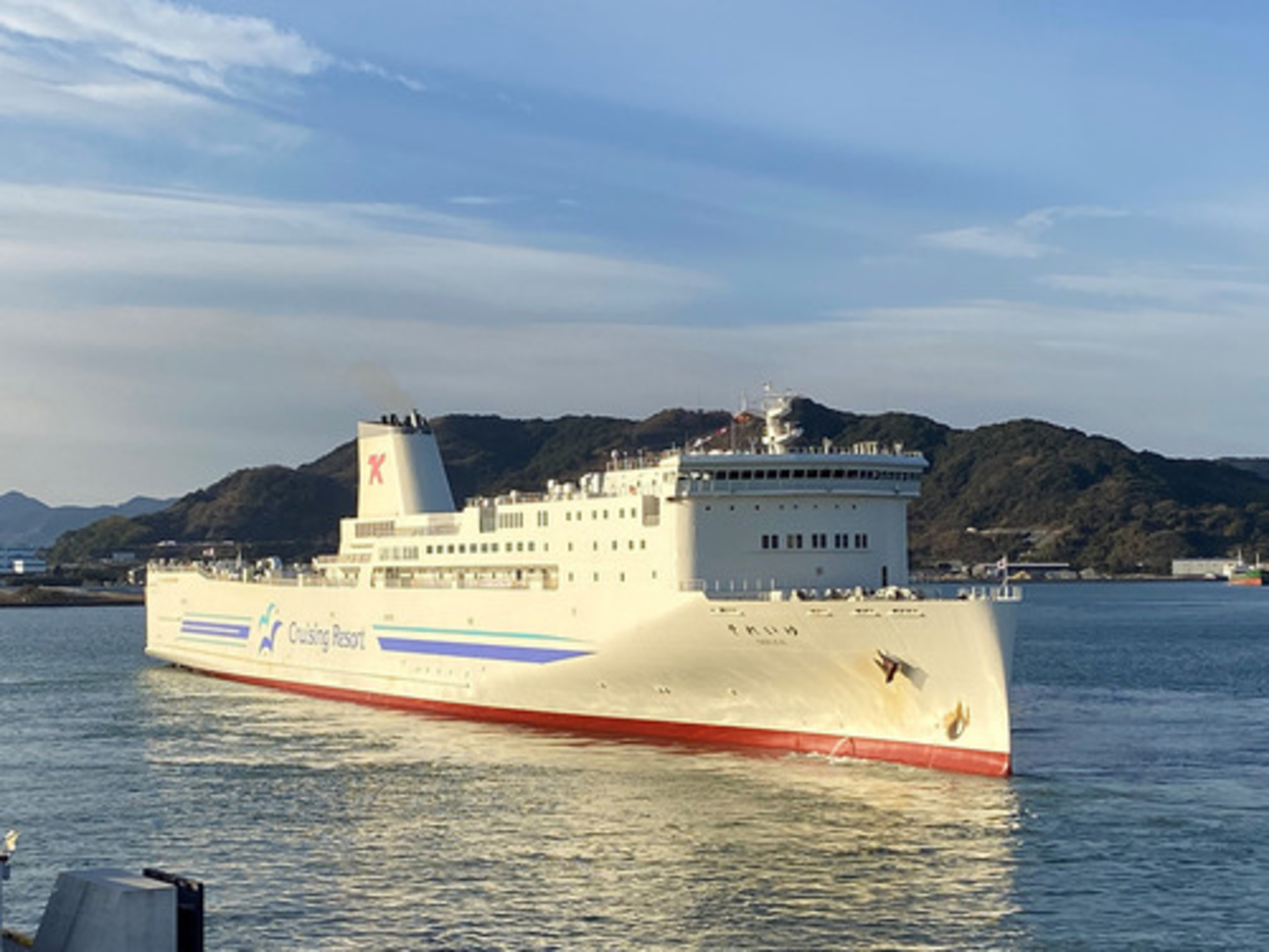
Under the Smart Coastal Ferry project, the 222-meter-long SOLEIL ferry navigated a 240-kilometer route from Shinmoji in Kita-Kyushu, Fukuoka Prefecture in western Japan, to Iyonada, Ehime Prefecture, which took approximately 7 hours at a maximum speed of 26 knots (50 kilometers) per hour.
The vessel was equipped with a high-precision sensor image analysis system featuring infrared cameras that can detect other ships and obstacles even in darkness, a “SUPER BRIDGE-X” automated ship navigation system that includes an automated avoidance function, and an advanced automated port berthing/unberthing operation system that can perform turning and reversing movements that are even difficult for manned vessels.
One of the biggest challenges for the fully automated vessel is fault prediction, and enhanced engine monitoring technologies that monitor motor conditions were developed and tested as well. The project is also developing various other technologies essential to the promotion of fully autonomous navigation, including platforms for advanced data security to protect the navigation data used for onshore monitoring and support.
The newly built SOLEIL began navigating with an onboard crew on July 1, 2021, compiling data for the development of a fully crewless ship navigation system.
Mitsubishi Shipbuilding, which has experience in developing navigation support systems that realize automation and crew labor savings, was responsible for the integration of the entire system, and Shin Nihonkai Ferry was in charge of setting the vessel’s system requirements and conducting the demonstration.
Mr. Mitsuyuki Unno, executive director of The Nippon Foundation, said: “This was the world’s first fully autonomous ship navigation of a large vessel of over 200 meters in length with a maximum running speed of 26 knots, and I hope this will lead to further development toward practical use.”
Currently, Japan’s domestic coastal shipping industry is grappling with an aging population of seafarers, more than half of them aged 50 and older, as well as a declining number of crew members working in the industry.
Under the circumstances, autonomous ships are expected to go a long way in reducing workloads and trimming operating costs. Besides, crewless navigation can also contribute to safety by reducing human errors, which account for about 80% of marine accidents.
There are still many issues to be resolved. I sincerely hope that the three other consortia participating in the “MEGURI 2040” project will join these two groups in successfully demonstrating their unmanned navigation systems to open the way for Japan to put crewless vessels into commercial service by 2025.
(End)


