
80% of Japanese Youths Concerned About Major Disasters, But Less Than 20% Familiar with Evacuation Guidelines

To look into how concerned young Japanese are about possible earthquakes and other major natural disasters, and how prepared they are for them, The Nippon Foundation conducted a survey on the subject of “Disaster Prevention and Mitigation” from August 26 and 31.
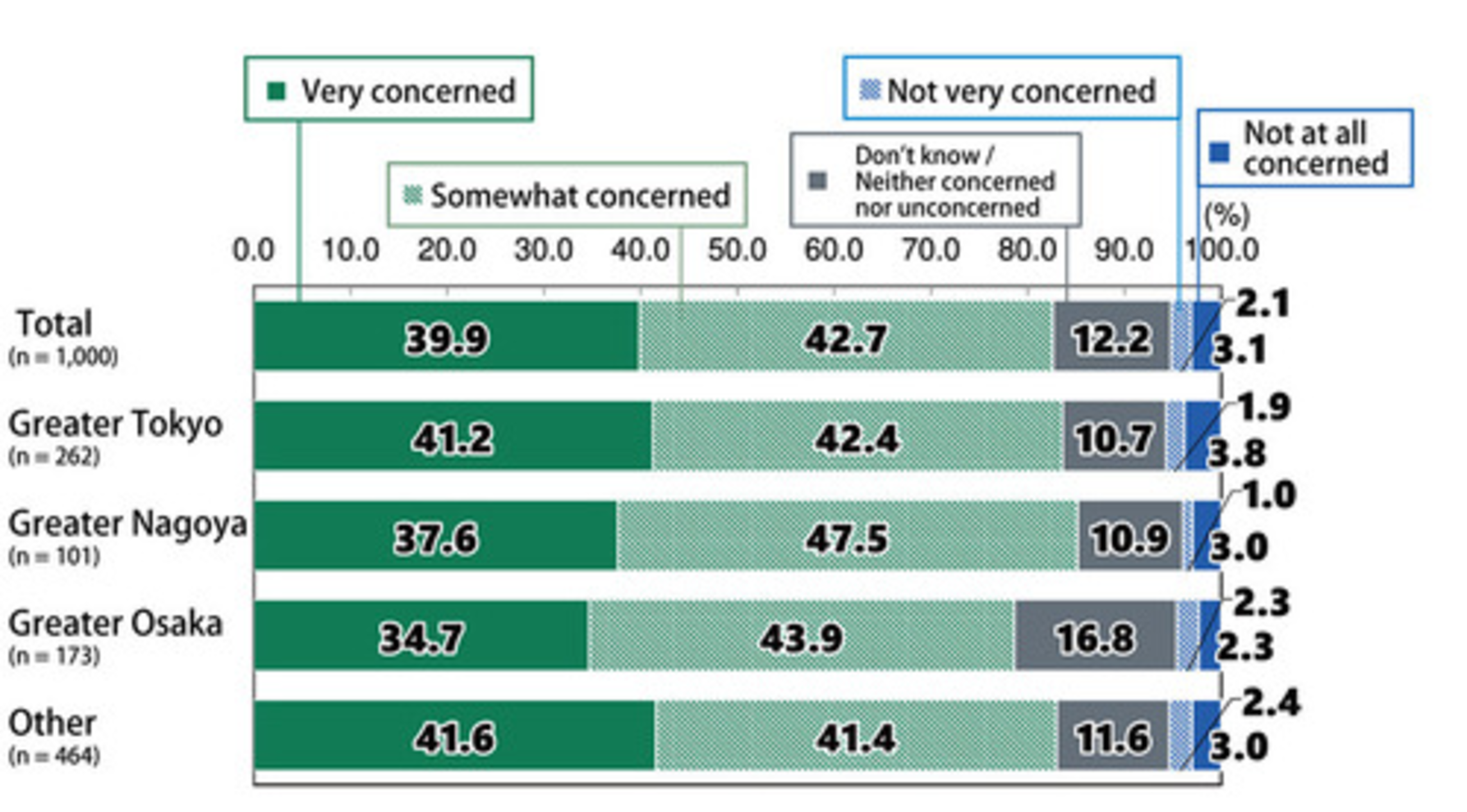
In particular, the nationwide online poll, covering 1,000 men and women aged between 17 and 19, found that four in five of respondents (82.6%) were either very or somewhat concerned about natural disasters exacerbated by global warming.
It also showed that almost same percentage (83.8%) was concerned about a possible large-scale earthquake hitting the country in the next 10 to 20 years.
However, more than half (56.1%) did not know the location of evacuation sites, such as parks and universities, designated by local municipalities for use as temporary evacuation areas in the event of a major disaster, while almost as many (55.0%) did not know the location of “evacuation centers” earmarked as temporary living quarters.
In response to frequent natural disasters in Japan in recent years, the Diet (Parliament) amended the Basic Act on Disaster Management in May 2021, calling for, among other things, abolishing the two-stage evacuation guidelines in order to ensure smooth and prompt evacuation in the event of a major disaster.
Before the revision, the guidelines obliged local municipalities to make “recommendations” to residents of a particular area to evacuate and seek refuge and then, should the situation become urgent, give “instructions” to do so.
However, the general public, especially the elderly who are most prone to be victims of disasters, found it difficult to understand the difference between the two, prompting the government to do away with evacuation “recommendations" and issue only “instructions” under the revised law.
When asked about the amended act, only one in five (18.1%) were aware of the guideline revision and familiar with the new guidance. Rather more (22.7%) were aware of the revision but not familiar with the new guidelines, while the rest were neither aware of the amendment (30.7%) nor of the existence of the guidelines (28.5%).
Regarding measures respondents have carried out to prevent and mitigate the impact of disasters, purchase and storage of emergency food items (31.4%) and drinking water (28.4%) topped the list, followed by confirmation of an evacuation center and evacuation routes (25.0%).
Concerning sources of information on large-scale disasters, almost half (45.2%) cited television programs, followed by Twitter (37.9%), internet searches (34.7%), news sites (22.2%), radio (20.5%), Line news (12.8%) and disaster prevention apps of local municipalities (11.3%).
Asked to evaluate the disaster prevention and mitigation measures in place at organizations, 40.4% believed schools were taking sufficient measures, followed by local governments (32.3%), the national government (30.8%) and local communities (29.0%).
The findings of the survey seem to indicate the need for the central and local governments to make better use of communication tools, especially social networks, to reach young Japanese people with easy-to-understand information on where to evacuate and what disaster prevention and mitigation measures are in place so that those measures work more effectively to save lives.

