
World’s First Fully Autonomous Passenger Ferry to Start Commercial Service in Japan Under the “MEGURI2040” Project (3)
Published on January 22, 2026

Under the “MEGURI2040” project, three more vessels are slated to start fully autonomous navigation on their respective commercial routes by the end of March.
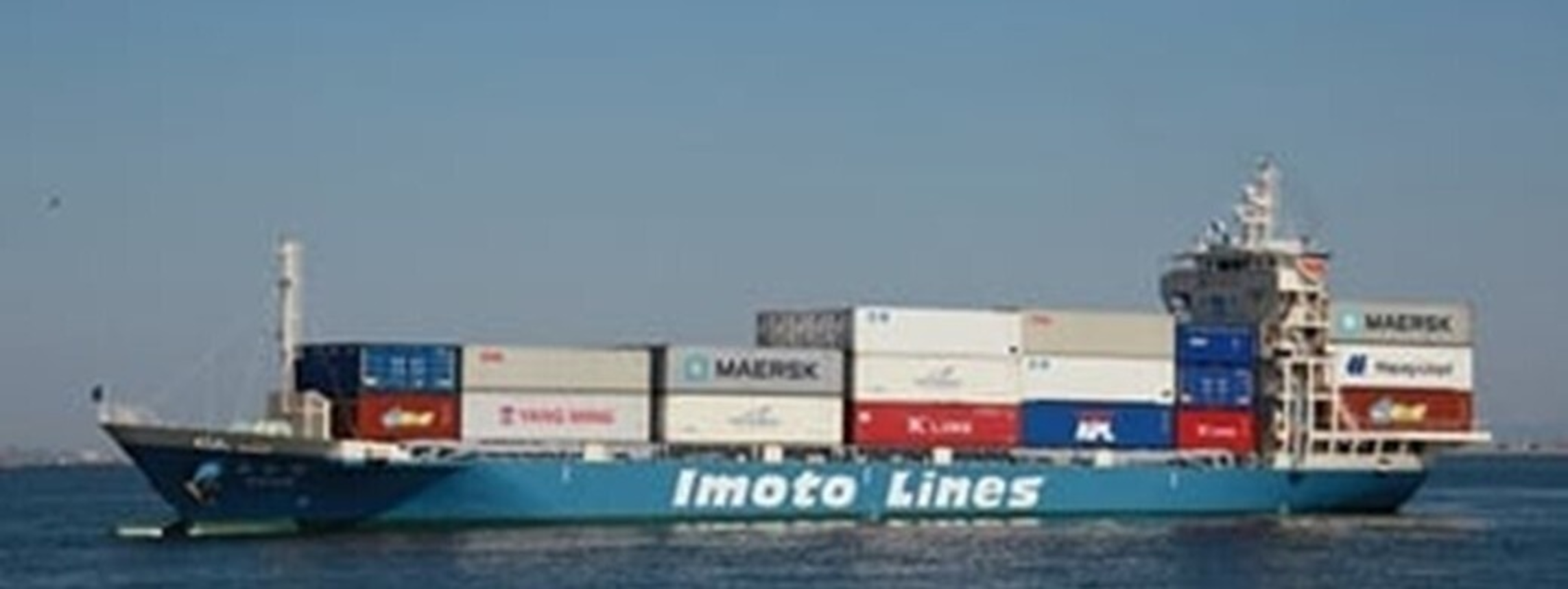
The 749 gross-ton 65-meter-long containership Mikage is being prepared for certification of its unmanned navigation system by the Japanese Ministry of Land, Infrastructure, Transport and Tourism (MLIT).
Developed by a group of three companies, led by Mitsui O.S.K. Lines, Ltd. (MOL), a major shipping company, the Mikage is set to operate on a commercial route between Kobe, western Japan, and Nagoya, central Japan.
Containerships of roughly the Mikage’s size (749 gross tons) play an important role in coastal transport in Japan, accounting for roughly 10% of coastal vessels in operation.
The 11,413 gross-ton 173.8-meter-long Roll-on/Roll-off (RORO) cargo ship Hokuren Maru No. 2 is being prepared for demonstration voyages in waters congested with fishing boats where it could also encounter fog.
Equipped with an autonomous navigation system, it is operated by a three-company team led by Kawasaki Kisen Kaisha (K Line).
It operates on a commercial sea route of approximately 1,600 kilometers round trip between Hitachi, some 140 kilometers northeast of Tokyo, and Kushiro in Hokkaido, Japan’s northernmost prefecture. It is due to start fully autonomous commercial navigation on the route upon obtaining the MLIT certificate.
The newly-built domestic containership Genbu was built anticipating unmanned operations. The 5,689 gross-ton 134.9-meter-long vessel was launched in April 2025 by a 15-company group, led by MTI (Monohakobi Technology Insititute) Co. It is due to serve a commercial route linking Kobe, Osaka, Nagoya and Yokohama, south of Tokyo.
I sincerely hope the three vessels will join the passenger ferry Olympia Dream Seto in passing screening by MLIT to start autonomous navigation on their respective commercial routes by the end of March.
Given the high levels of Japan’s IT and AI technologies combined with its years of experience as a leading shipping and shipbuilding country, I strongly hope that Japan will lead the way in the field of unmanned vessels.

The 11,413 gross-ton Roll-on/Roll-off (RORO) cargo ship Hokuren Maru No. 2 is being prepared for demonstration voyages in congested and foggy waters and slated to obtain government certification for operating a commercial service using an autonomous navigation system.
