The Nippon Foundation-Nekton Ocean Census Discovers at Least 38 New Marine Species on Japan’s Least Explored Deep Seafloor
Published on June 17, 2026
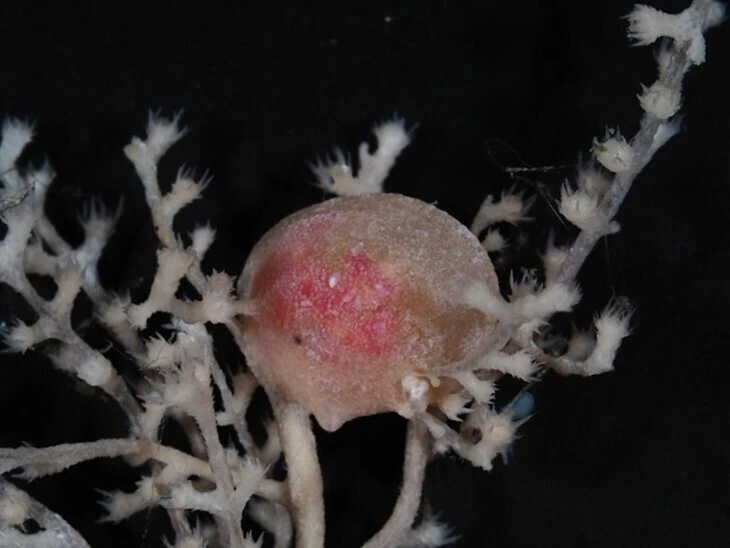
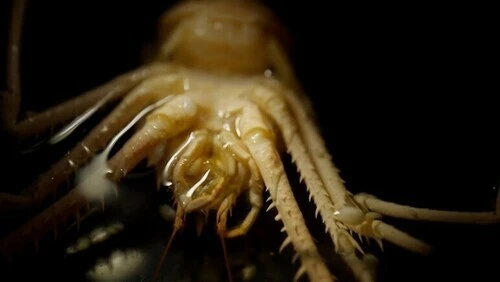
A landmark international expedition, led by The Nippon Foundation–Nekton Ocean Census, has confirmed the discovery of 38 new species and identified 28 further potential new species across Japan’s most understudied deep-sea regions.
Ocean Census’ first deep-sea expedition to Japan was undertaken in June 2025 in partnership with the Japan Agency for Marine-Earth Science and Technology (JAMSTEC), focusing on the Nankai Trough and the Shichiyo Seamount Chain.
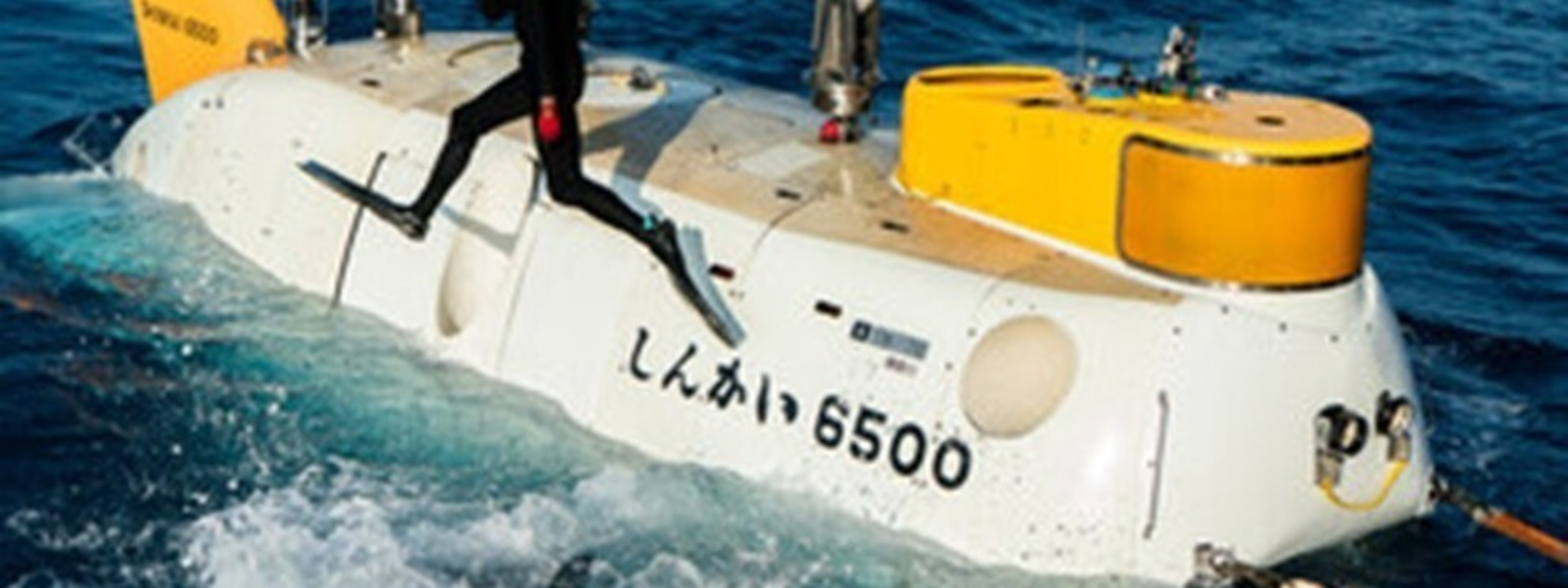
The voyage, conducted aboard JAMSTEC’s research vessel Yokosuka and supported by the Shinkai 6500 manned submersible, collected 528 specimens, all catalogued, imaged and preserved for future morphological and molecular analyses.
In October 2025, taxonomists from Japan and around the world convened at JAMSTEC headquarters in Yokosuka, 65 kilometers south of Tokyo, for a dedicated Species Discovery Workshop, confirming the status of these new and potentially new species and coordinating next steps for the publication of scientific papers.
Among these discoveries are those that have led to two breakthrough studies: a comprehensive survey in the journal Ecosphere, led by JAMSTEC researcher Dr. Chong Chen, revealing a five-fold increase in biodiversity at Nankai Trough cold seeps, and research in The Zoological Journal of the Linnean Society led by Dr. Naoto Jimi, which demonstrates the remarkable evolutionary history of symbiotic sponge-dwelling worms, which have evolved to live “in a glass castle”.
Mr. Mitsuyuki Unno, executive director of The Nippon Foundation, commented: "The discoveries made in the Nankai Trough and the Shichiyo Seamount Chain remind us how little of our ocean has truly been explored. By supporting missions like this, The Nippon Foundation is helping to open a new frontier of knowledge for Japan and for humanity."
Dr. Michelle Taylor, head of science of The Nippon Foundation–Nekton Ocean Census, stated: "Each new species discovery made by the Ocean Census is a step toward understanding, valuing and ultimately safeguarding our shared ocean. This expedition shows what is possible when world-class scientific institutions collaborate to explore the unknown."
Ocean Census was launched by The Nippon Foundation and Nekton, a U.K.-based marine research institute, in April 2023 with the ambitious target of finding at least 100,000 new marine species in the first decade.
The Ocean Census JAMSTEC-Shinkai 6500 expedition marked Japan’s flagship contribution to this global initiative, which has been officially endorsed as a UN Ocean Decade program.
Japan’s leadership in ocean technology and science is exemplified by the Shinkai 6500-one of the world’s deepest-diving human-occupied research submersibles capable of diving to a depth of 6,500 meters.
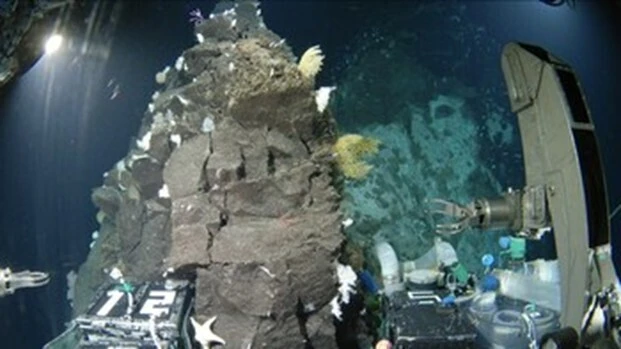
Following the landmark international expedition in June 2025 led by The Nippon Foundation–Nekton Ocean Census in partnership with the Japan Agency for Marine-Earth Science and Technology (JAMSTEC), a major new study has revealed a five-fold increase in known biodiversity in the Nankai Trough, one of Japan’s most geologically active deep-sea regions located 500–600 kilometers southwest of Tokyo.
The expedition was led by JAMSTEC researcher Dr. Chong Chen with a team of expedition scientists. It documented 80 animal species, making this the most comprehensive biological survey of the region ever undertaken. Previously, just 14 animal species were known to inhabit cold seeps.
The Nankai Trough paper is published on Ecosphere Journal and can be read free of charge here.
The 80 seep-associated animal species documented are as follows:
33 molluscs – including snails, clams, and a glisten-worm;
23 annelids – including lugworms;
11 arthropods – crustaceans such as crabs, shrimp and amphipods;
5 nemerteans – ribbon worms;
4 echinoderms – sea stars, brittlestars and sea cucumbers;
3 cnidarians – Zooanthid, anemone and hydroid; and
1 bryozoan – Bryozoa.
The results include numerous range extensions, new national records and previously unknown species associations, revealing the Nankai Trough has an exceptionally rich biodiversity.
Southeast of Tokyo and 500–700 kilometers offshore, the Shichiyo Seamount Chain rises from the northwestern Pacific as a series of submerged volcanic peaks.
Prior to the 2025 expedition, many of these remote seamounts had remained largely unexplored from a biological perspective. During the landmark Ocean Census expedition, researchers aboard the Shinkai 6500 conducted biological dives in this region, revealing rich ecosystems, including new coral gardens and seafloor areas densely covered with sponges.
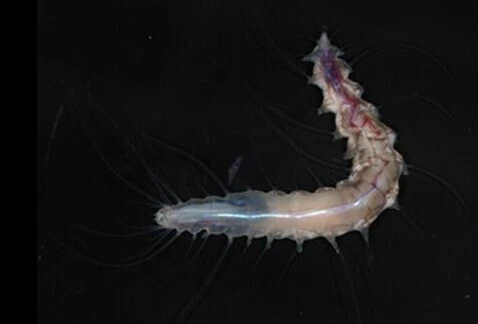
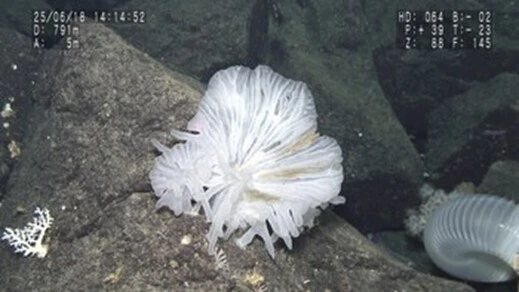
During one of the dives, a large glass sponge observed at Shichiyo Seamount was found to play an important biological role for certain polychaete worms. This study formally describes and names two new species of polychaete worms-Dalhousiella yabukii and Leocratides watanabeae-which were found living symbiotically within the same glass sponge.
Glass sponges construct an intricate, mesh-like skeleton out of silica, the same material used to make glass. Living within this structure is akin to residing in a “glass castle,” as the rigid, translucent framework provides a protected cavity for symbiotic animals.
Although these worms share a single “glass castle,” analysis suggests their symbiotic lifecycle evolved independently. A paper detailing these findings has been published in the Zoological Journal of the Linnean Society and can be accessed from here.
Beyond these symbiotic worms, the Shichiyo Seamount dives also revealed:
Five new species of squat lobsters, including deep-sea species belonging to the genus Munidopsis; newly observed octocorals, nemerteans, amphipods, gastropods and kinorhynchs; and several species previously thought to be rare or absent from Japanese waters.
Together, these findings position the Shichiyo Seamount Chain as a region of special interest for Japanese marine science, with rich biodiversity hidden across terrain that had remained unvisited by researchers until now.
A further 28 potential new species identified during the expedition still await formal classification. And the ocean floor off Japan-let alone the rest of the world’s deep seas-has barely been surveyed.