
Japan-China Field Officer Exchanges to Resume Next Month, 35th Anniversary of Bilateral Medical Fellowship Program to Be Marked on July 28 (2)

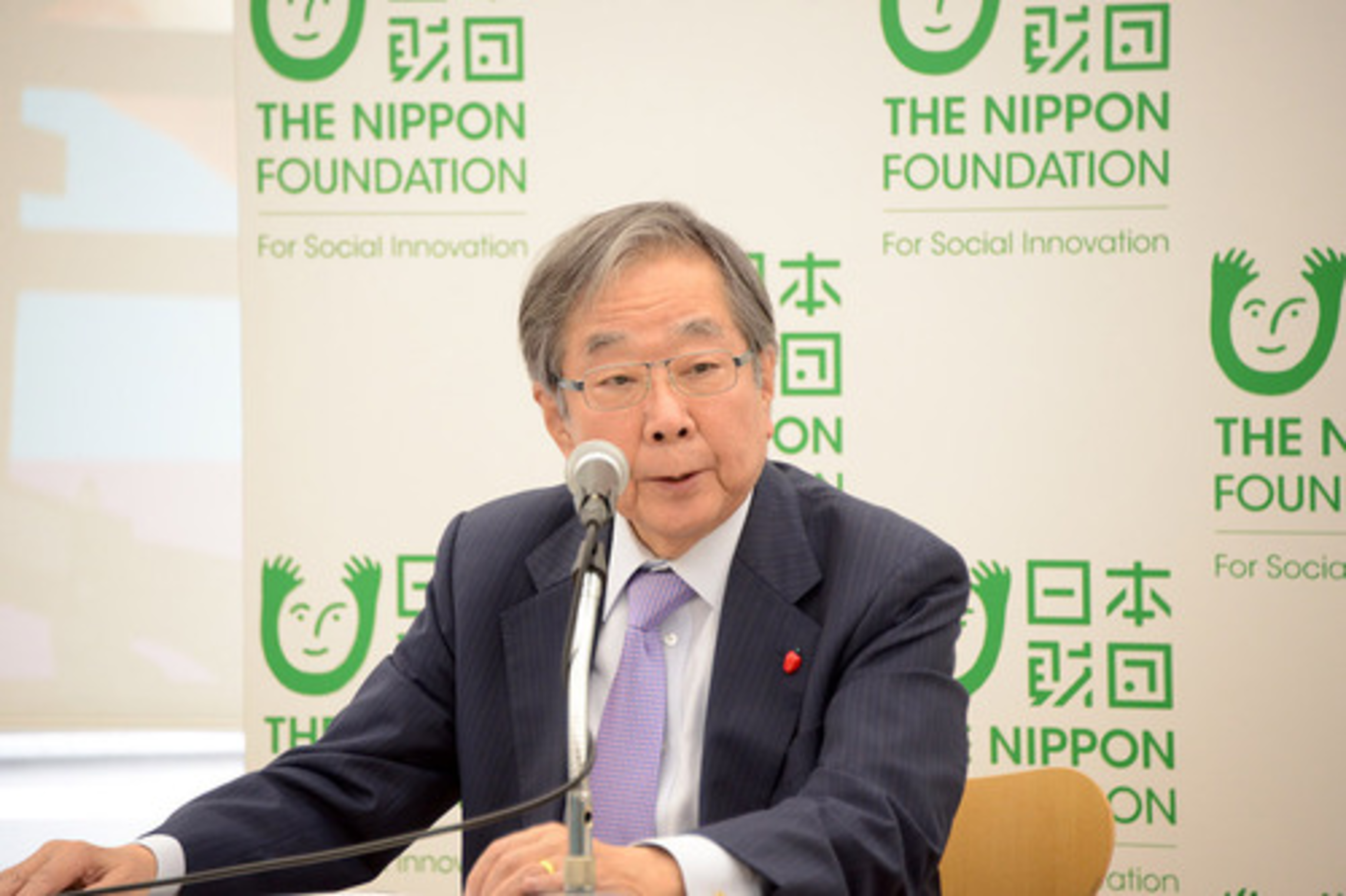
In addition to the resumption of the Japan-China Field Officer Exchange program, I announced at a press conference on May 30 that a gala ceremony to celebrate the 35th anniversary of the Japan-China Sasakawa Medical Fellowship program will be held at the Great Hall of the People in Beijing on July 28 after a two-year delay due to the coronavirus pandemic.
The Nippon Foundation started the fellowship program from a humanitarian point of view in 1986 to help China, which was still a developing country, take care of the health of its people.
Initially, we invited some 100 doctors, pharmacists and nurses every year to study at Japanese universities, hospitals and other institutes across the country. But with Chinese medical research advancing substantially as the years went by, we later invited some 30 health professionals for doctoral courses and joint research programs with their Japanese counterparts.
So far, some 2,400 Chinese medical students and professionals have studied and conducted joint research in Japan under the program, while 1,686 professors and instructors from 225 Japanese institutions have taught and worked with the Chinese students.
The fellows who took part in the program now serve at the center of the Chinese medical profession, among them 18 presidents or vice presidents of universities and medical schools, 30 directors or assistant directors of hospitals, and 1,250 professors across the nation.
I told the press conference that more than 1,000 Chinese fellows have already indicated their wish to attend the gala ceremony, which will also be joined by 200 to 300 professors and instructors from Japan.
When the program was launched in 1986, few scholarship programs were available to Chinese students, and if they did study abroad, they seldom returned to China to work.
But I noted that virtually all the students who came to Japan under the Sasakawa fellowship program returned to China every year and now work throughout the nation, adding: “As a result, this program is highly appreciated by the Chinese government.”
Dr. Hideoki Ogawa, president of the Japan China Medical Association, said: “Today, the relationship between Japan and China is shifting from an age of ‘instruction’ to an age of ‘joint research,’ and we aim for this program to be a model for joint research between Japan and China.”
I believe it is important for the ordinary citizens of both countries to know each other well, regardless of the state of political relations at any given time, looking back at the history of our bilateral relations over 2,000 years.
In the belief that we should spare no effort to understand each other, The Nippon Foundation and its partner organizations will continue to engage in a wide range of exchanges with China in the decades to come.
(End)
