
39th WHO Sasakawa Health Prize Awarded to Professor Vichai Tienthavorn of Thailand and the Nick Simons Institute of Nepal

At a ceremony in Geneva on May 26, I presented the 39th WHO Sasakawa Health Prize to Professor Vichai Tienthavorn of Thailand and the Nick Simons Institute of Nepal.
The prize was established by my late father, Ryoichi Sasakawa, in 1984 to recognize individuals and organizations engaging in innovative efforts to improve people’s health and, at the same time, establishing greater equity in health through the promotion of primary health care.
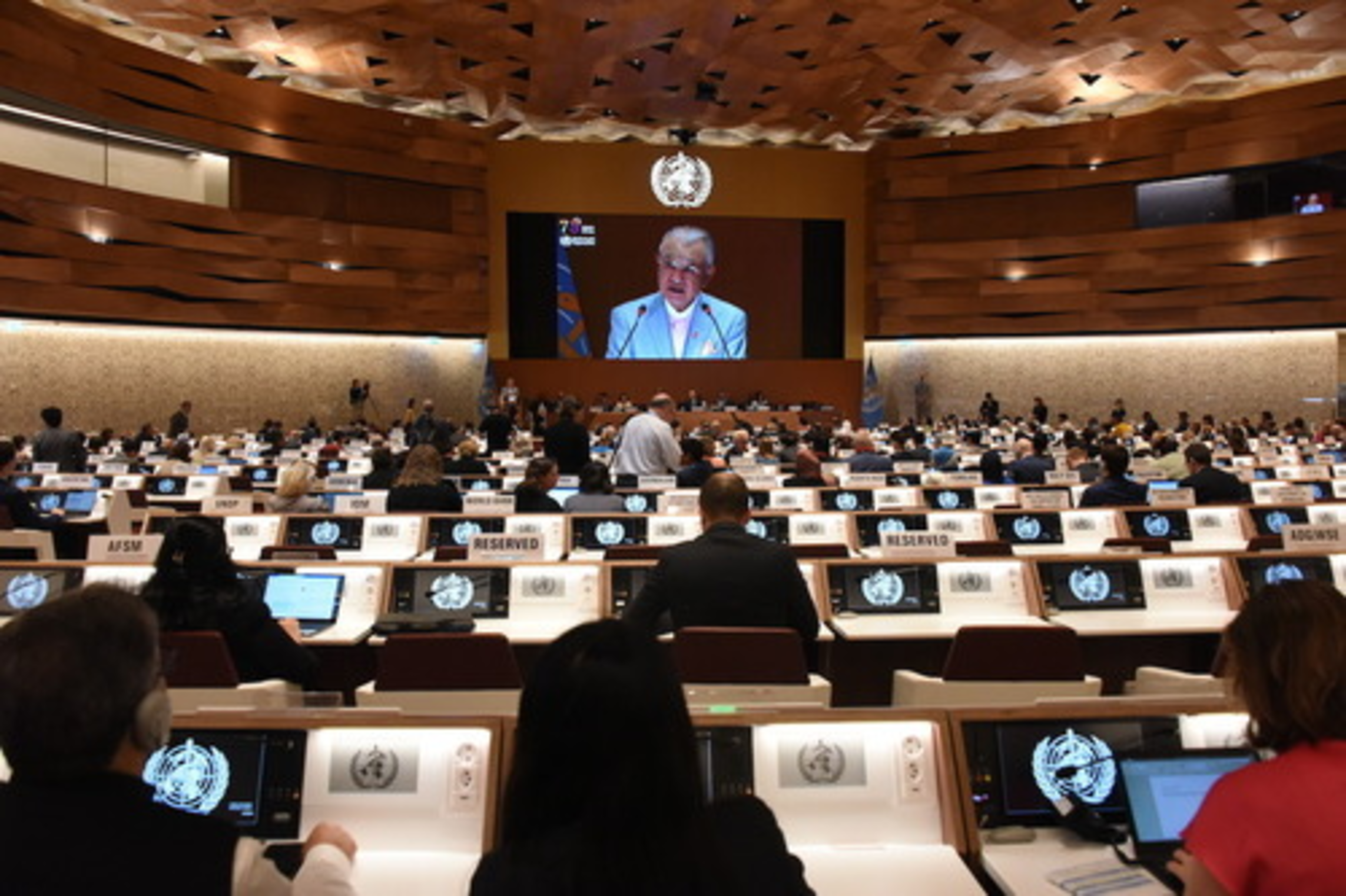
I joined the ceremony during my week-long visit to the Swiss city to attend the 76th World Health Assembly, the WHO’s decision-making body, as chairman of The Nippon Foundation and WHO Goodwill Ambassador for Leprosy Elimination.
Professor Vichai Tienthavorn is president of the Praboromarajchanok Institute (PBRI) at the Ministry of Public Health of Thailand. He was recognized for coming up with an innovative health promotion approach to tackling thalassemia, an inherited blood disorder that causes the body to produce less hemoglobin than normal, which has resulted in the adoption of an effective national policy for thalassemia prevention and control.
He has also made outstanding contributions to addressing the maldistribution of the health workforce in Thailand, especially in border and rural areas, including the development of training programs for medical professionals and local health workers.
“This is a most fortunate moment in my life”, said Professor Tienthavorn in accepting the prize, adding: “PBRI trains 4,000 nurses annually. We offer health and public health trainings to students from rural marginalized areas, at the rural primary care facilities. My never-ending effort will continue.”
The Nick Simons Institute is a nongovernmental organization aiming to improve health care and fill health workforce gaps in rural areas of Nepal. In cooperation with the country’s Ministry of Health and Population, it has trained 7,000 medical professionals, such as midwives and anesthetic assistants, in rural areas, to enable them to provide the services that are most needed by the local population in the absence of a sufficient pool of general practitioners and specialists.
Dr. Archana Amatya, executive director of the institute, said: “This is the first time that a health champion from Nepal has been awarded this prize, which makes it even more special for us, motivating the country to progress further on, with innovative solutions for primary health care in rural areas.”
I congratulated the two laureates, expressing my deep respect for their outstanding work and my desire that they will continue to work as pioneers in further advancing primary health care.
The award ceremony took place at the historic Palais des Nations, which houses the United Nations Office at Geneva, in the presence of WHO Director-General Dr. Tedros Adhanom Ghebreyesus and Malta’s Deputy Prime Minister and Minister for Health Chris Fearn, who served as president of the 76th World Health Assembly.
The text of my speech at the 39th WHO Sasakawa Health Prize award ceremony can be seen here.


