
Japan Takes Essential Step in Second Stage of “MEGURI 2040” Project Toward Commercialization of Fully Autonomous Ships (1)

Kawasaki Kisen Kaisha (K Line), a major Japanese shipping company, has successfully completed a sea demonstration test of an autonomous navigation system installed on a large Roll-on/Roll-off (RORO) cargo ship on a round-trip voyage of approximately 1,600 kilometers on a commercial sea route.
This marked an essential step in the second stage of the Joint Technological Development Program for the Demonstration of Unmanned Ship, dubbed “MEGURI 2040,” financed and administered by The Nippon Foundation. The project aims at putting autonomous ships into commercial service in 2025 and eventually making half of Japan’s domestic coastal shipping fleet crewless by 2040.
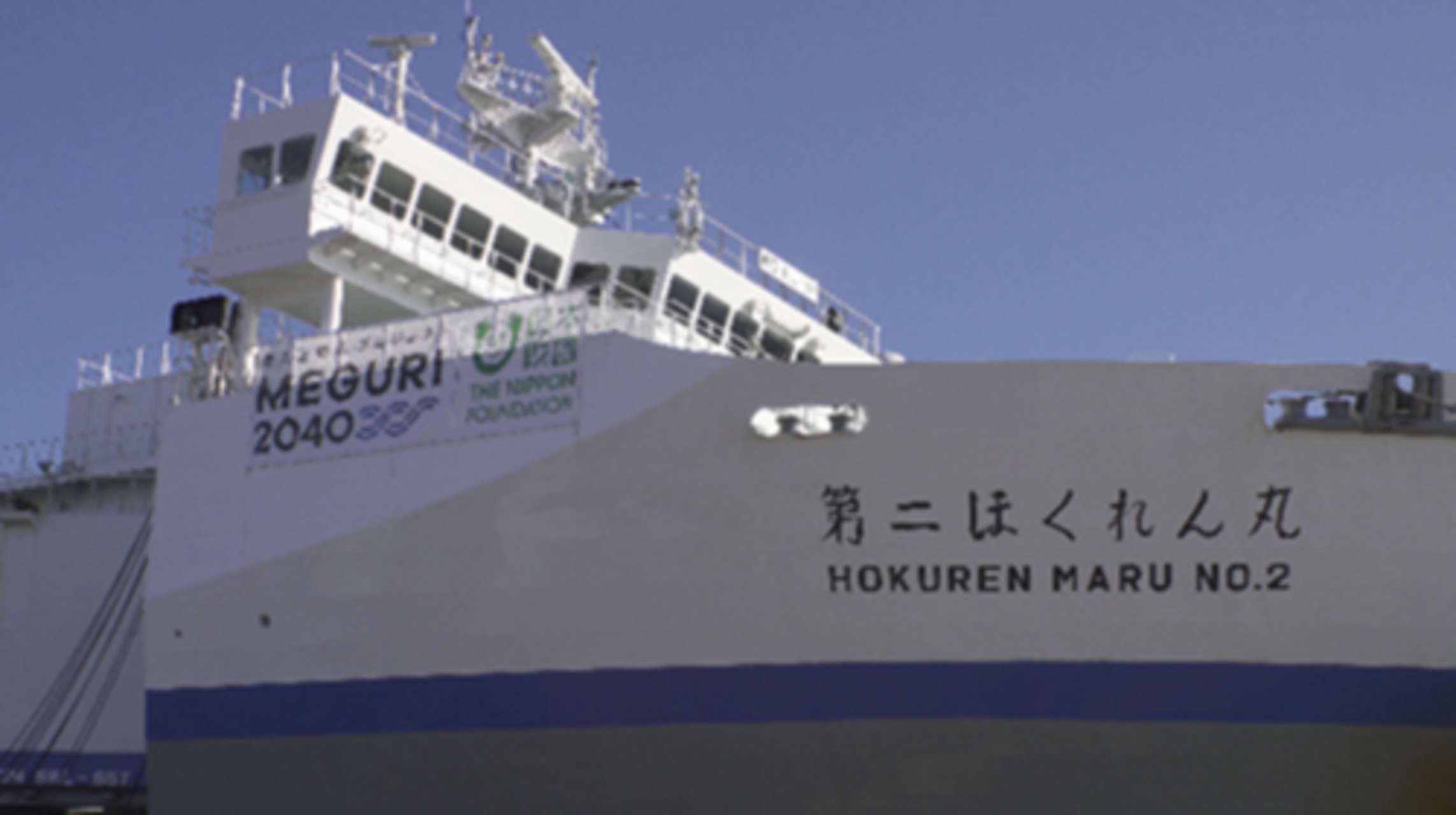
For what’s known as a Proof of Concept (PoC) stage sea demonstration test, the autonomous navigation system was installed on the 11,413 gross-ton RORO cargo ship Hokuren Maru No. 2 operated by K Line.
The test comprised three voyages starting on October 1, 2023, on a 1,600-kilometer round-trip route along the Pacific coast between Hitachi Port, about 100 kilometers northeast of Tokyo, and Kushiro Port in Hokkaido, the northernmost Japanese prefecture-a long-used service route for the RORO cargo ship.
“We confirmed that recognition, analysis and decision-making by the autonomous navigation system are executed with a high degree of accuracy in coastal navigation,” said K Line in a statement.
“In the experimental route, the autonomous navigation system was used to navigate while maintaining the normal crew navigation tasks, and in situations where avoidance was necessary, the autonomous navigation system proposed avoidance routes and controlled steering to safely avoid other vessels.”
The autonomous navigation system has achieved an impressive average system operation rate of approximately 96% in the sea area set as the operational design domain (ODD), the company said.
The ODD is a set of operating conditions for an automated system, including environmental, geographical and time of day constraints, traffic and roadway characteristics. It is used by manufacturers to indicate where their product will operate safely. The concept of ODD indicates that automated systems have limitations and that they should operate within predefined restrictions to ensure safety and performance.
K Line has collaborated with YDK Technologies Co., Japan Radio Co., Ltd. Ltd., and Kawasaki Kinkai Kisen, in developing the comprehensive system that advances the technology of fully autonomous ships.
Using its knowledge of safe maritime operations, the team intends to further improve the autonomous navigation system using the data gathered from the demonstration tests.
K Line also plans to create ship-to-shore and off-board communication strategies to monitor vessel conditions and continuously offer navigational assistance from shore.
(To be continued)
