
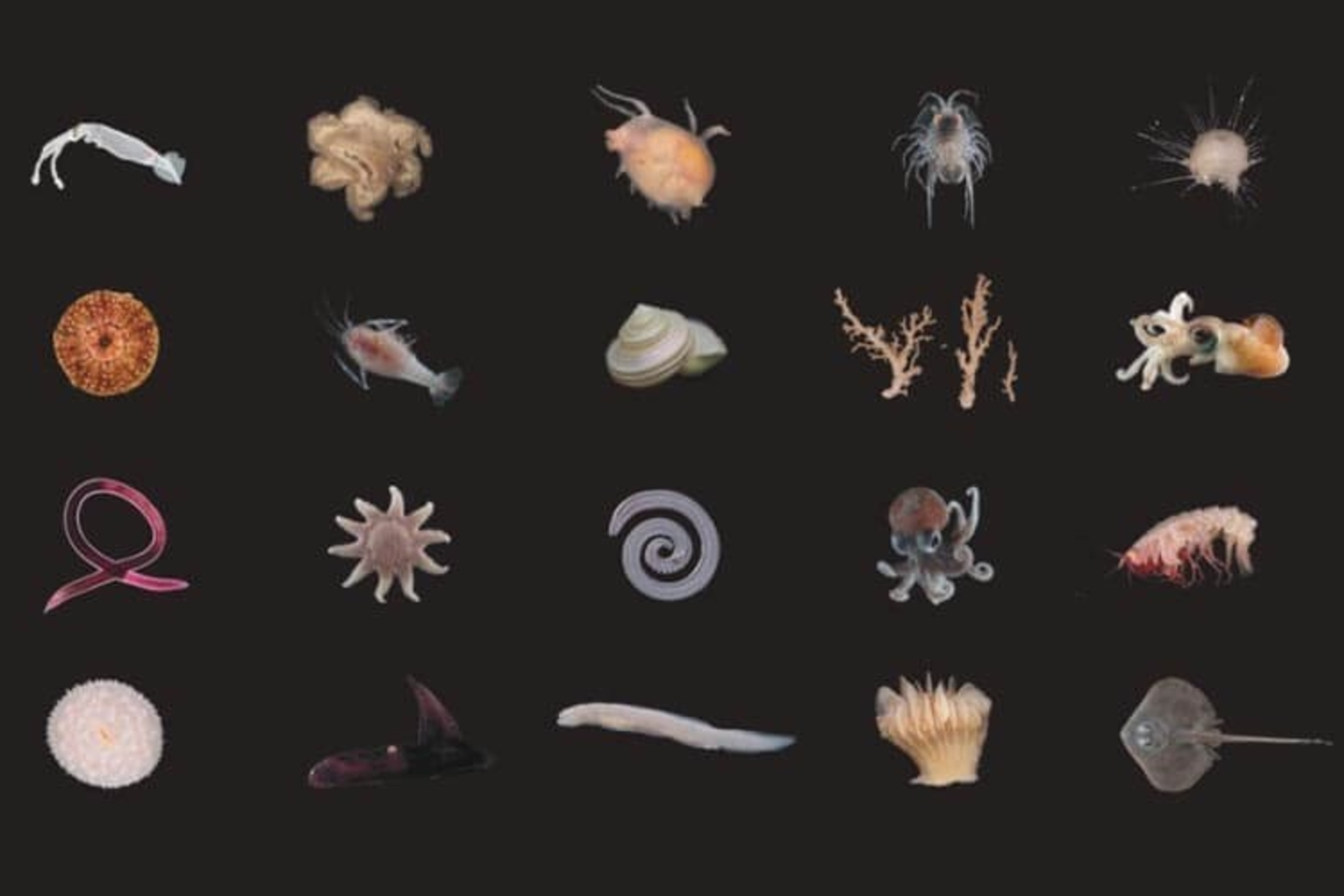
100 New Marine Species Each Discovered Off Chile, New Zealand Under The Nippon Foundation-Nekton Ocean Census Project (2)

Following the discoveries of 100 potentially new marine species off the coast of Chile, global group of scientists found at least as many species likely new to science, this time, off New Zealand.
Both expeditions were conducted under Ocean Census, a global alliance to accelerate the discovery and protection of life in the ocean launched by The Nippon Foundation and the U.K.-based ocean exploration foundation Nekton in April 2023.
Off New Zealand, the team embarked on a three-week voyage in February to the largely unexplored waters of the Bounty Trough, off the coast of the South Island in hopes of finding a treasure trove of new species.
The group consisted of 21 researchers from Ocean Census, the National Institute of Water and Atmospheric Research of New Zealand (NIWA) and the Museum of New Zealand Te Papa Tongarewa (Te Papa) as well as experts from the U.K. and Australia.
Their discovery exceeded expectations with the finding of 100 new and potentially new marine species, a number that is expected to grow, according to NIWA’s press release.
During the three-week voyage on NIWA’s research vessel Tangaroa, the scientists collected almost 1,800 samples from as deep as 4,800 meters underwater along the 800-kilometer-long largely unexplored Bounty Trough.
They first mapped the area with an imaging system and video cameras to ensure it was safe for their equipment and to ensure that no vulnerable animal communities could potentially be harmed.
Then, they used a sampling tool called the Brenke sled, which has two nets, one near the seabed and the other one meter above. To find larger animals, the researchers used other methods, such as baited nets.
Ocean Census Science Director Professor Alex Rogers, who co-led the expedition commented: “It looks like we have a great haul of new, undiscovered species. By the time all our specimens are examined, we will be north of 100 new species. But what’s really surprised me here is the fact this extends to animals like fish-we think we’ve got three new species of fish.”
NIWA said new species identified so far include dozens of molluscs, three fish, a shrimp, a cephalopod and a new genera of coral. One find is baffling the experts.
Queensland Museum Network Taxonomist Dr. Michela Mitchell said the researchers now think it could be a new species of octocoral, but also a new genus (wider grouping of species), noting: “Even more excitingly, it could be a whole new group outside of the octocoral. If it is, that is a significant find for the deep sea.”
Mr. Andrew Stewart, Curator Fishes, Te Papa, said: “It was a privilege to collaborate with NIWA and Ocean Census. While our findings are significant, we know that we’ve barely scratched the surface of the Bounty Trough-there’s a whole other world of fauna still waiting to be discovered.”
According to Ocean Census, over two million species are estimated to live in the oceans, but only 10 percent of ocean life is known. It is vital to learn more about the aquatic life because marine ecosystems carry out functions that support life on Earth, such as creating food for billions, storing carbon and regulating climate, Dr. Rogers said.
“We’re dealing with a situation where we know marine life is in decline. In order to try to manage human activities to prevent this continuing decline, we need to understand the distribution of marine life better than we currently do,” he added.


