
The Nippon Foundation to Provide $2 Million to Relocate 40,000 Displaced Persons from Myanmar to Bhasan Char Island in Bangladesh (1)

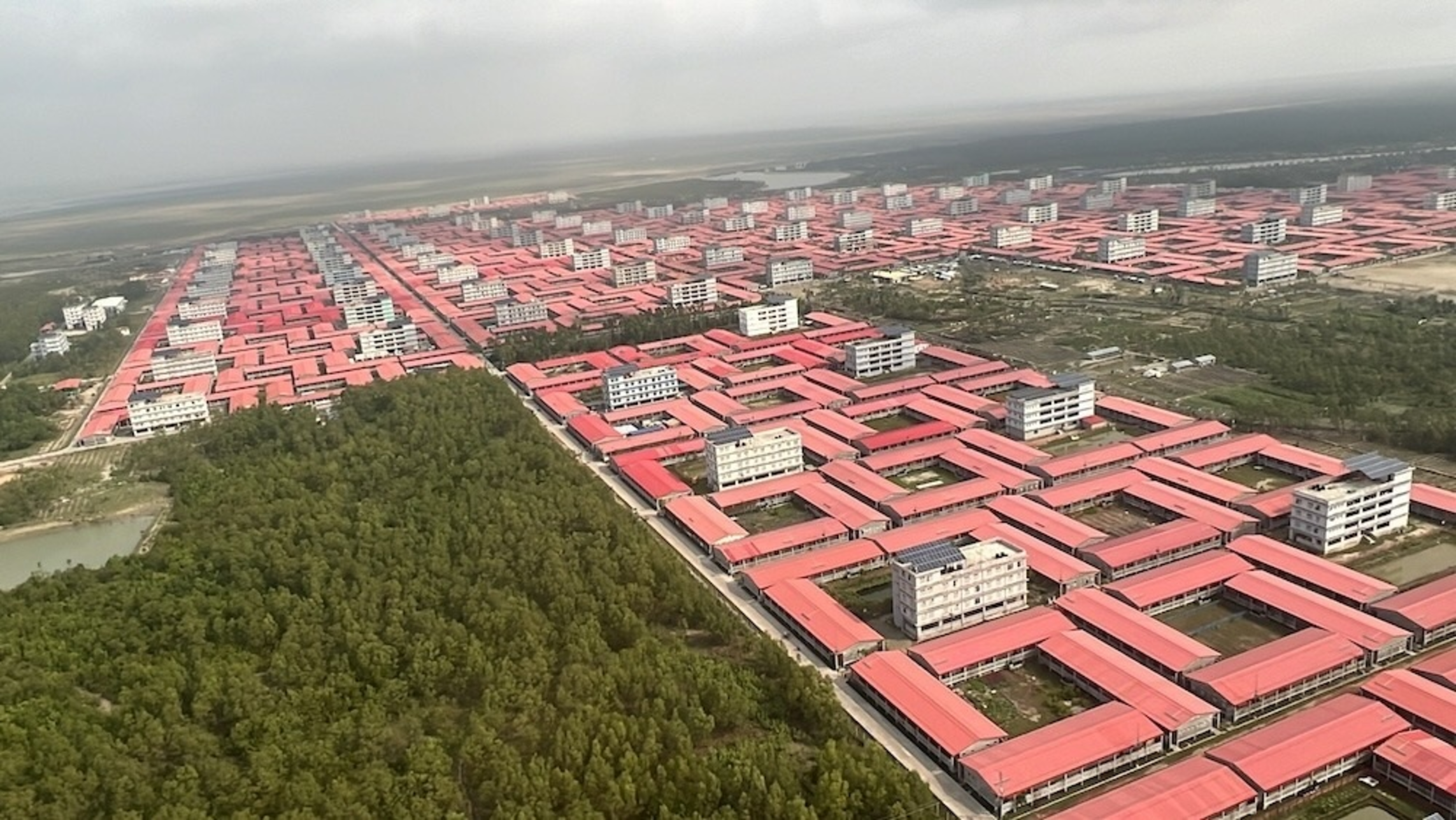
The Nippon Foundation has decided to provide $2 million to help the Bangladesh government relocate some 40,000 displaced persons from Myanmar to the island of Bhasan Char from the Cox’s Bazar camp in the southeast of the country. I made the decision after I visited the island in the Bay of Bengal on April 6 to gain a firsthand insight into the situation of the Muslim refugee community there and the role the foundation’s humanitarian assistance is playing. I was impressed by the support the Bangladesh government has provided to these displaced people by constructing a 14-kilometer-long embankment to protect the island from flooding as well as beautifully-built houses, schools, hospitals and mosques, powered by solar energy. As of January 31, 2024, 32,574 displaced persons comprising 7,899 families were living on the island located about 60 kilometers from the Bangladesh mainland, according to the United Nations High Commissioner for Refugees (UNHCR). Since 2017, almost a million displaced persons have been forced to take refuge in Bangladesh, mostly in Cox’s Bazar, after fleeing the conflict-stricken western Myanmar state of Rakhine. To reduce the pressure on Cox’s Bazar, the Bangladesh government under the leadership of Prime Minister Sheikh Hasina launched a project in 2020 to relocate up to 100,000 refugees to Bhasan Char. Initially, the United Nations and other international aid organizations questioned the sustainability of this initiative due to the island’s remoteness and perceived vulnerabilities to cyclones, floods, storm surges and rising sea levels. But after the first groups of refugees, numbering in the thousands, had settled in after agreeing to be relocated there, they became supportive of the program. Upon arriving in Bhasan Char by helicopter from the capital Dhaka, I spoke with Dr. Hussain Zillur Rahman, chairman of BRAC (Bangladesh Rural Advancement Committee), a Dhaka-based NGO with which The Nippon Foundation has collaborated in providing humanitarian assistance to displaced persons from Myanmar in Bangladesh. He said that the Bangladesh government has built facilities on Bhasan Char to accommodate 40,000 more refugees from Myanmar, but has yet to secure ways of financing the relocation. (To be continued)

|