
Less Than Half of Japanese Youths Interested in and Feel Affinity with the Imperial Family: Poll

Under the Japanese Imperial Household Law of 1947, succession to the Chrysanthemum Throne is limited to a male heir on the emperor’s side. But Emperor Naruhito, who ascended the throne in May 2019, has only three heirs: his younger brother Crown Prince Akishino (58), his nephew Prince Hisahito (17), and his paternal uncle Prince Hitachi (88).
Alarmed by the limited number of male heirs, Prime Minister Fumio Kishida called in October 2023 for more active Diet (Parliament) deliberation and established a study group to accelerate the debate on the issue of imperial succession, including the possibility of changing the law to allow women to ascend to the throne. The Emperor and Empress Masako only have a daughter, 22-year-old Princess Aiko.
Against this background, The Nippon Foundation conducted an awareness survey on May 17-18, covering 1,000 men and women aged between 17 and 19 to look into how they see the world's oldest continuous hereditary monarchy.
The online poll also asked them questions on job hunting, including some related to practices specific to Japan.
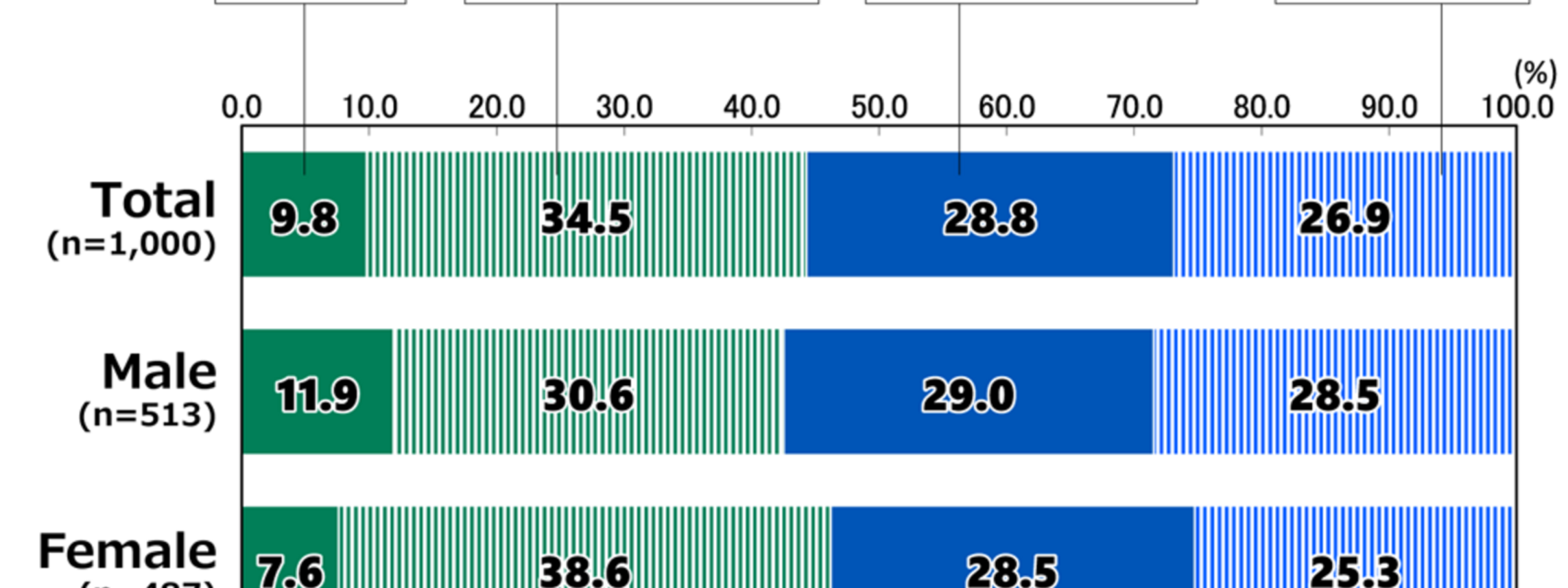
The online poll found that less than half of the respondents were interested in the imperial family (44.3%) or felt an affinity with it (46.6%).
As for how they are exposed to information on the imperial family, more than 60% (61.4%) cited television news and variety shows reporting on imperial household members performing their official duties.
When those who said they were not interested in the imperial family (55.7% of the total) were asked what would make them interested, the most common suggestions were social media posts by imperial family members of their generation (27.1%) and posts by the Emperor and Empress (26.0%). But almost half (48.1%) said they didn’t know.
When asked about the Instagram account launched by the Imperial Household Agency in April, which mainly posts photos of the Emperor and the Empress, almost two thirds (66.2%) of respondents were unaware of it, while three in ten (29.2%) knew about it but were not following it at the time of the survey. A mere 4.6% knew about the account and were following it, in part because the poll was only taken about 45 days after the account was launched on April 1, 2024.
On the subject of job hunting, the survey asked students planning to enter the workforce about “assignment gacha,” a term that refers to accepting a job without knowing specifically where they will be assigned geographically or within the company. Gacha is a kind of Japanese vending machine game where the player puts in coins and turns a lever to receive a random prize. The poll showed that more than 70% (71.6%) were concerned about the practice.
If they were assigned to a position that was not in line with their preferences, almost two thirds (65.3%) replied that they would work hard anyway, while just over one in ten (12.9%) said they would work with minimum effort. On the other hand, one in five (20.5%) said they would change jobs.
With regard to “taishoku daiko” or “resignation agents”, a term referring to companies that help people leave their jobs, about a third (34.5%) said they would like to use such a service if necessary.
Asked what was behind the increase in the number of people using such services, two thirds (67.0%) blamed companies that assign someone to an environment in which employees have no choice but to use taishoku daiko services, while 27.5% said the problem lies with employees who use such services without speaking directly to their companies.

