
Infectious Disease Research Center, Financed by The Nippon Foundation, Completed in Osaka to Prepare Japan, the World to Tackle Future Pandemics
Published on May 12, 2025

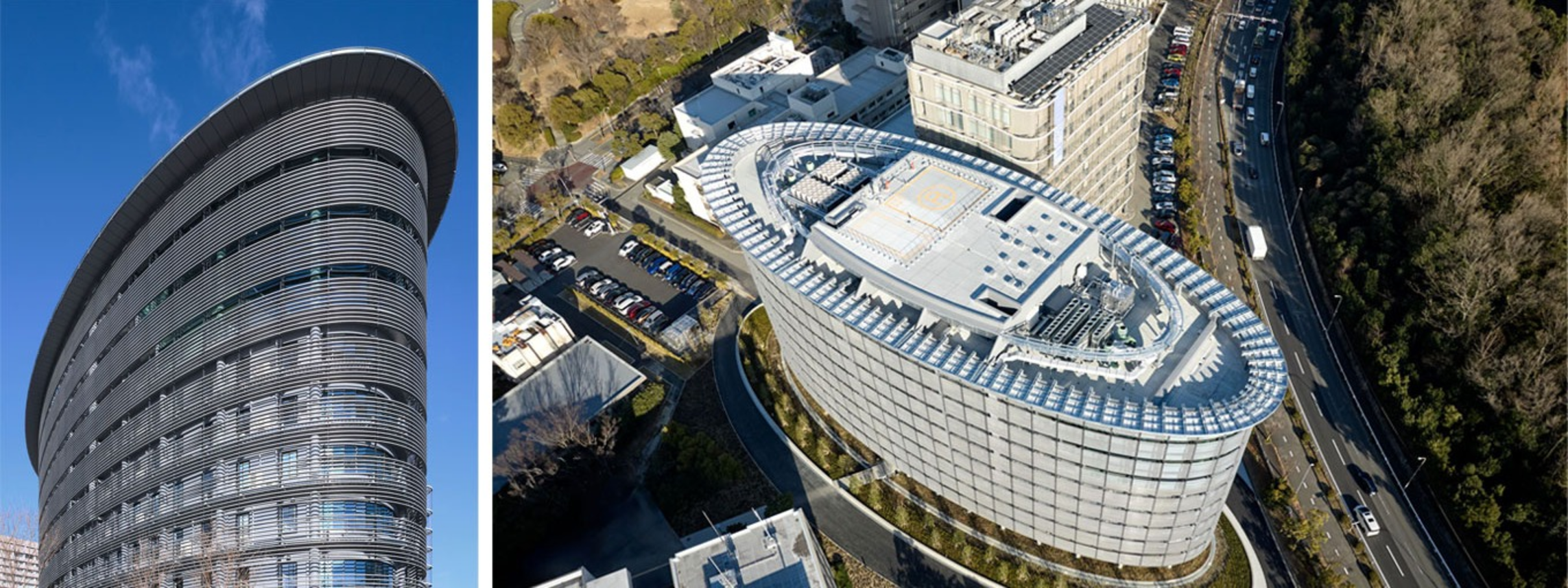
I went to Osaka, western Japan, in late March to attend a ceremony to celebrate the completion of the “UOsaka and Nippon Foundation Center for Infectious Disease Education and Research” aimed at better coping with future pandemics. Designed by world-renowned architect Mr. Tadao Ando based on the concept of “Spaceship Earth,” the 10-story facility with a total floor space of 17,619 square meters on the Suita campus of the University of Osaka is one of the largest infectious disease research centers in Japan.
Work on the building began in September 2023, funded by 25 billion yen (about $174 million) from The Nippon Foundation and the Motorboat Racing Association, which consists of municipal authorities organizing motorboat racing at 24 stadiums across Japan.
The March 24 ceremony was attended by some 100 dignitaries and guests, including Mr. Ando, Dr. Shojiro Nishio, the university’s president, and Mr. Norio Takano, representative director of the association and mayor of Fuchu City in Tokyo.
Speaking at the ceremony, Mr. Nishio stated: “The center will be an international hub of excellence for education and research on infectious diseases, where cutting-edge researchers from around the world will gather. It will be a hall of fame for fostering the next generation of human resources for infectious disease control.”
“As a hub for comprehensive knowledge on infectious diseases, we will do our utmost to bring together wisdom that transcends academic boundaries,” he added.
Mr. Ando, the 1995 laureate of the Pritzker Architecture Prize, which is often referred to as “architecture’s Nobel,” explained that the building features an elliptical shape to evoke an image of “Spaceship Earth” to incorporate a sense of bringing together top researchers from around the world in a collaborative endeavor. In particular, he referred to a three-story “co-creation space” atrium spanning the seventh to ninth floors for researchers to have free dialog in multiple languages to generate innovation.
The COVID-19 pandemic has significantly strained Japan’s health care system while dealing a heavy blow to its economic activities. But in contrary to my long-held belief that Japan had led the world in developing new vaccines and treatment, it totally depended upon anti-COVID vaccines developed by foreign pharmaceutical manufacturers, including Pfizer Inc. and Moderna Inc. of the United States and AstraZenica plc, a British-Swedish company based in England.
I said at the ceremony that I sincerely hope that the new research center will help prevent Japan and the world from being badly hit by future pandemics caused by as yet unknown infectious diseases by pioneering cutting-edge medicines and vaccines through promoting open innovation among research institutions and companies at home and abroad.


|