

Nikkei Scholarship - Sergio Suzuki : Setback is the key to become a member of the Japan's National Taekwondo team for the Tokyo 2020 Olympic games
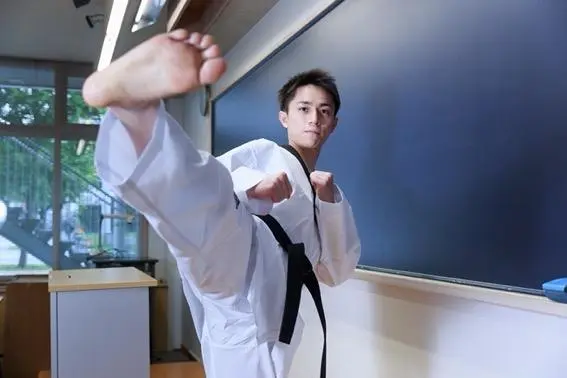
We often see that many “Nikkei” people who have roots in Japan and another country, have represented Japan in the world of sports.
One such athlete is Mr. Sergio Suzuki, representing Japan at the Tokyo Olympic games to be held in 2021.
Mr. Suzuki grew up in Bolivia, and studied at high school in South Korea. With the support of “Nikkei Scholarship Dream Come True Project”(external link), one of the scholarship programs developed by the Nippon Foundation, he decided to come to Japan to gain experience as a taekwondo athlete at Daito Bunka University.
He is currently training for the upcoming Olympic games as an athlete employee at Tokyo Shoseki Co., Ltd..
In this interview, Mr. Suzuki talks about what he has gained through the “Nikkei Scholarship” project by Nippon Foundation and his future goals.
■Undefeated champion experiences a setback in South Korea, the birthplace of Taekwondo
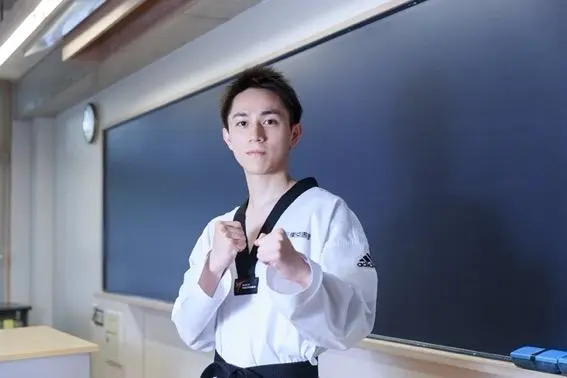
Mr. Suzuki trains at his Alma mater, Daito Bunka University, for the Tokyo 2020 Olympic games whilst being the first athlete employee at Tokyo Shoseki Co., Ltd..
“Right now, I'm focusing more on my training for the upcoming Olympic games, but I usually work in the Human Resources Department three mornings a week. I do simple office work and prepare materials for interviews for new graduates. I'm living the life of an athlete whilst working as an employee.”
His life as an athlete has not been smooth sailing.
He was born in the middle of three brothers to a Japanese father and Bolivian mother, and grew up in Kanagawa prefecture until he moved to Bolivia with his family at the age of five. When he turned six years old, he joined the taekwondo club at the municipal martial arts gym where his older brother was learning karate.
“At that time, I was really into the movie 'Enter the Dragon' and was influenced by Bruce Lee.”
He performed well in taekwondo competitions in Bolivia, winning the first place of adult division at the age of 15. Followed by his great success in Bolivia, his father encouraged him to study in South Korea, the home of taekwondo.
He attended Hanseong High School which has a good taekwondo club team. Despite his hard practice, he remained a substitute in the school, and his best result was top eight in the Seoul city tournament.
Taekwondo is the national sport of South Korea, which is immensely popular in the country with a large number of players and its bench strength. Their teaching style was very strict with long hours of intensive practice.
“I have never been defeated by anyone in Bolivia...... But after coming to Korea, I realized that I was not even in the same league. The amount of practice was so much that I could barely keep up with them, then I noticed the world is much bigger than I ever imagined. I even thought about going back to Bolivia, but then I thought again because I have not accomplished anything yet.”
Then he began to consider going to either a university in Korea or Daito Bunka University in Japan.
Although he participated in training camps and practices at Korean universities, he got the same impression as he did in high school. Because of the number of players, their coaching style inevitably focuses on the top players.
“All of my seniors and friends who studied in Korea went on to Korean universities. Therefore, it is true that there was an atmosphere in which leaving Korea was seen as an 'escape'. The large amount of practice in Korea has built up my body and the experience of losing to great players is helping me in the present. However, I thought that I would get more opportunities to change myself in Japan.”
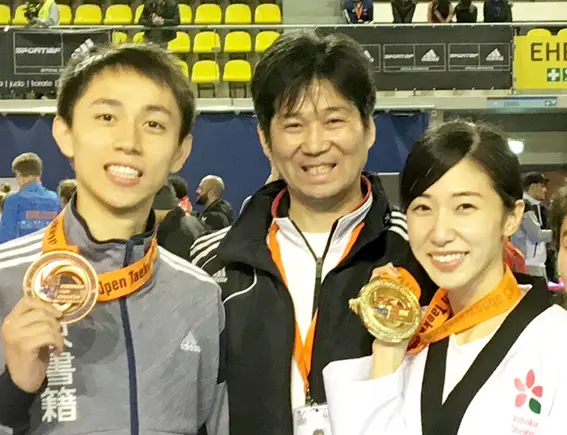
Mr. Suzuki had visited Japan to participate in the Japan National Championships whilst studying in Korea. As such, he was familiar with the situation of Taekwondo in Japan and was particularly interested in Daito Bunka University.
Daito Bunka University holds the famous taekwondo athletes such as Ms. Erika Kasahara, who placed 7th in the 49kg class at the 2012 London Olympics Games. It was a very attractive environment for Mr. Suzuki to be surrounded by his rivals and world famous athletes.
When he was struggling with his career path, his father recommended the “Nikkei Scholarship” program by Nippon Foundation, which opened up his way. He had an interview for the scholarship in Peru whilst returning to Bolivia during free school attendance period in his senior year of high school, and it went successfully.
“Thanks to the scholarship, I was able to come to Japan and take a different path from all of my rivals in Korea. I was also glad to be able to relieve my parents’ financial burden [by landing this scholarship.]”
■Aiming to represent Japan in the Olympics
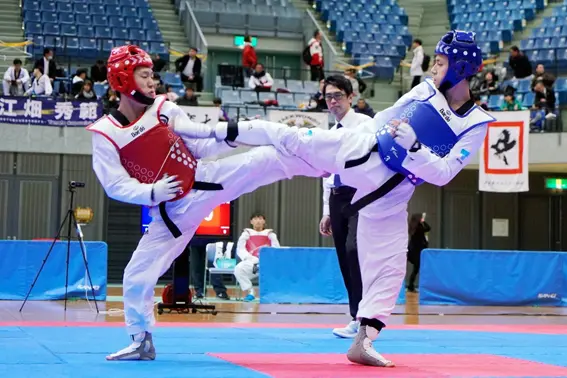
He enrolled at Daito Bunka University and studied for four years with financial support from the “Nikkei Scholarship” project. One of the significant changes within himself after joining the taekwondo club led by coach Hiroshi Kanai, a former member of Japan national taekwondo team, is his consciousness in training.
“I developed a sense of initiative with advice 'to think for myself' by the coach. Not only did I work on training with an insatiable desire 'to be a good athlete', but I also started to think about 'how' in independent practice.”
It was around the time that Mr. Suzuki began to grow his ”analytical ability” as his strength.
There were times when he could not win for a long time despite his hard work in practice. On the other hand, he continuously enjoyed motivation from each other with his highly conscious rivals under supervision of coach Kanai at Daito Bunka University.
After six months from his enrollment, he competed in the All Japan Intercollegiate Taekwondo Championship held by All Japan Taekwondo Association, and things started to improve.
“I won the All Japan Intercollegiate Taekwondo Championship three years in a row from the first year of university and made it to the finals in my senior year. I also became the winner of the All Japan Taekwondo Championship in the second and senior year.”
Furthermore, he participated in competitions in Korea and was able to win against corporate athletes and players from great club teams at university.
“That was the moment I realized that 'I can go further from here (at Daito Bunka University)'.”
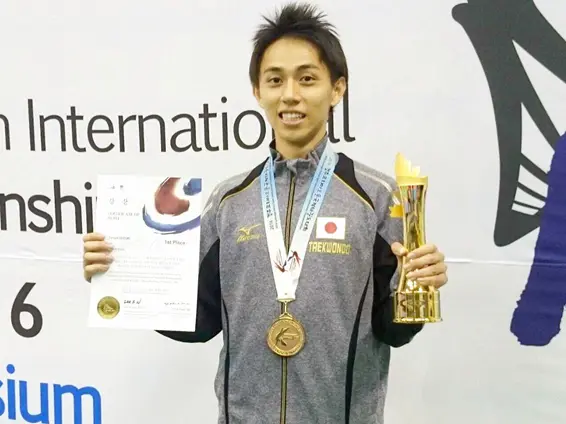
In Korea, even if you do well in high school, you are not able to go on to a famous university without winning a medal in a big competition. In addition, there is a department of Taekwondo at university, and many of his classmates chose to become instructors instead of athletes.
In 2016, Mr. Suzuki won the Korea International Open Championships held in Gyeongju, South Korea in his senior year of university.
“I felt like I was recognized for my hard work not only by my classmates in Korea but also by teachers in high school. I was very happy to have everyone to celebrate warmly.”
Athletes often face troubles in different food cultures during overseas expeditions, but Mr. Suzuki is an exception. He has grown up with Bolivian and Japanese food at home, and with Korean food in high school.
“I have been to many countries on expeditions but I never had dishes that disagreed with my palate. That may be one of my strengths as well as my ability of analysis and defense in taekwondo.”
■A wish to contribute to Bolivia in return
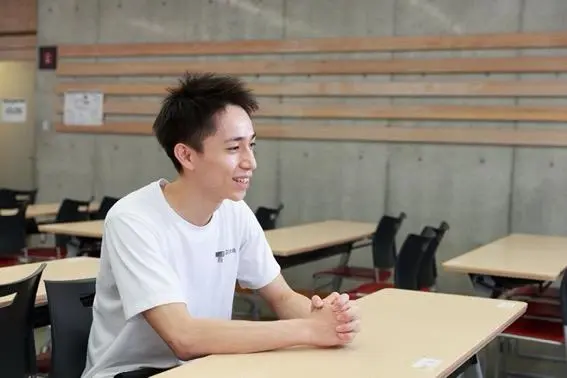
Mr. Suzuki sets his future goal as to help Bolivia.
“The reason I was able to go to Korea and Japan was not because I had any special ability. With the support of my parents and the people around, along with my Japanese citizenship, I was able to gain a lot of experience. In the future, I would like to support children with talent in taekwondo in Bolivia as my contribution to the country.”
Mr. Suzuki points out that there is very little support given for sports in Bolivia, therefore he would like to help promising athletes for participating in competitions abroad. To make it happen, “influence” is essential.
“I want to become a person as influential as the president of the country and contribute to creating a society in Bolivia where people can enjoy sports. It would be also great if I can be a help to the Japanese descendants and Japan. I would like to return the favor.”
He also mentioned that the Japanese restaurant which his parents run in Bolivia has not been able to reopen for a long time due to the outbreak of Covid-19.
“I want to support my parents going through a difficult time with Covid-19. Well, I'm still trying to figure things out.”
For Mr. Suzuki, the “Nikkei Scholarship” was full of advantages.
“This is a scholarship that supports your dreams. I would not find any better scholarship than this. Thanks to the support I received, I did not work part-time for a living, and I was able to focus on taekwondo which helped me to make achievements during my four years at university.”
The dream of “competing in the Olympics in taekwondo” may be too big for one person to achieve. However, if you keep your chin up and continue to make efforts like Mr. Suzuki, there is always someone to give you a hand. Then you will have friends who can support each other and help you go further.
It is our own efforts that will open up the future.
Photography : Noriyuki Sakano
Profile Mr. Sergio Suzuki
Born on October 9, 1994 and grew up in Kanagawa Prefecture and moved to Bolivia at the age of five. Currently belongs to Tokyo Shoseki Co., Ltd..
After studying at Hanseong High School in South Korea, joined the taekwondo club at Daito Bunka University. The All Japan Intercollegiate Taekwondo Championship (held by AJTA) winner 2013-2015, runner-up in 2016, and All Japan Taekwondo Championship winner 2014 and 2016-2018. He has also achieved brilliant results in international competitions as a student, including winning the 58kg weight class at 2016 the Korea International Open Championships in Gyeongju, South Korea. Since joining Tokyo Shoseki Co., Ltd., he has won numerous competitions including the 11th All Japan Taekwondo Championship in 2018 and the 12th All Japan Taekwondo Championship in 2019. He won the 58kg class at the final selection round for the Japanese representative to the 2020 Olympic Games in Tokyo, and became a member of Japan's national Taekwondo team for the Olympics.