
70% of Japanese Youths Use Public Toilets, But Have Negative Image of Them Depending on Location (1)

Japanese toilets are attracting global attention as a symbol of the spirit of omotenashi, or selfless hospitality, as exemplified by a seat and lid that open and close automatically, a seat that warms up to provide maximum comfort, a flushing sound to mask bodily noises, an electronic bidet known as “Washlet” (a registered trademark of the Japanese toilet company TOTO Ltd.)that makes wash and blow-dry functions possible, and automatic deodorization.
But unlike public bathrooms in department stores, other commercial facilities and airports, toilets in parks and along footpaths suffer from an image problem: they are seen as dark, dirty, smelly and scary, causing many people to avoid using them.
To phase out these images, The Nippon Foundation launched THE TOKYO TOILET project last year to renovate public toilets at 17 locations in Shibuya Ward, central Tokyo, for use by anyone safely and in comfort regardless of gender, age or disability. These toilets are designed by 16 internationally-renowned architects, including four laureates of the Pritzker Architect Prize-often referred to as “architecture’s Nobel”-such as Mr. Tadao Ando, Mr. Toyo Ito, Mr. Shigeru Ban and Mr. Fumihiko Maki.
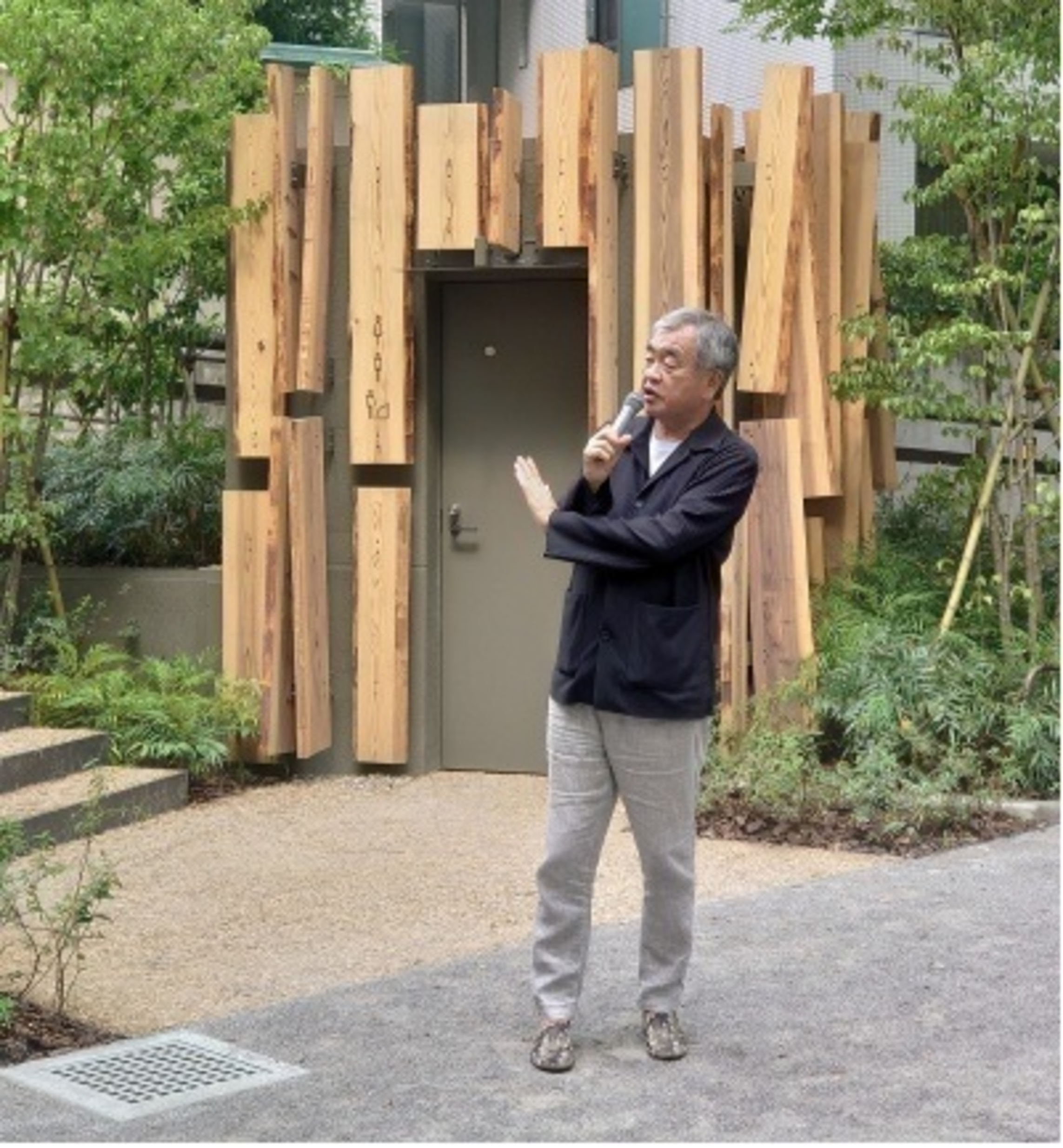
Recently, the ninth toilet installed under the project, designed by architect Mr. Kengo Kuma, was unveiled on June 24 inside the lush green surroundings of Nabeshima Shoto Park. (Mr. Kuma designed the new National Stadium in Tokyo, the main venue for the Olympic Games that opened on July 23 following a one-year delay due to the novel coronavirus pandemic.)
Against this background, The Nippon Foundation conducted a nationwide online survey on the subject of “public toilets” from May 14 to 18, covering 1,000 Japanese youths aged between 17 and 19.
The poll found that seven in 10 respondents (70.5%) use public toilets when they go out. But the frequency of use differs remarkably depending on where the toilets are located. More than half of respondents (57.1%) said they use toilets in department stores, movie theaters and other commercial facilities; on the other hand, only 13.5% said they regularly use bathrooms in parks and along footpaths.
Compared with other locations, young Japanese had a particularly negative image of toilets in parks and along footpaths with two in three respondents describing them as “dirty” (67.6%), followed by “smelly” (28.6%), “dark” (23.4%) and “dangerous” (22.8%). Positive impressions of their being “clean” and “safe” were cited by only 3.1% of respondents in each case.
Two in five Japanese youths (40.6%) said they hardly use bathrooms in parks and along footpaths, while almost a half (45.9%) said they do not use them at all. Female respondents in particular noted the need for more safety and security measures at such public toilets with 27.2% describing them as dangerous (compared with 18.4% for males).

(To be continued)