
Hydrogen Fuel Cell Vessel Demonstrated Successfully Under The Nippon Foundation’s Zero Emission Ship Project (2)

In addition to the MOTENA-Sea consortium that conducted a successful test of a hydrogen fuel cell ship system that emits zero carbon dioxide (CO2), there are two other groups of Japanese companies aiming to conduct demonstration tests of ships with hydrogen-only combustion engines by the end of fiscal 2026 (March 2027), also under The Nippon Foundation’s Zero Emission Ship Project
A consortium of Yanmar Power Technology Co. (YPT), a subsidiary of Yanmar Holdings, and five other companies is aiming to build and demonstrate a tanker equipped with a hydrogen-fueled combustion engine, while a group consisting of JPNH2YDRO and 11 other firms is developing a hydrogen-fueled passenger vessel.
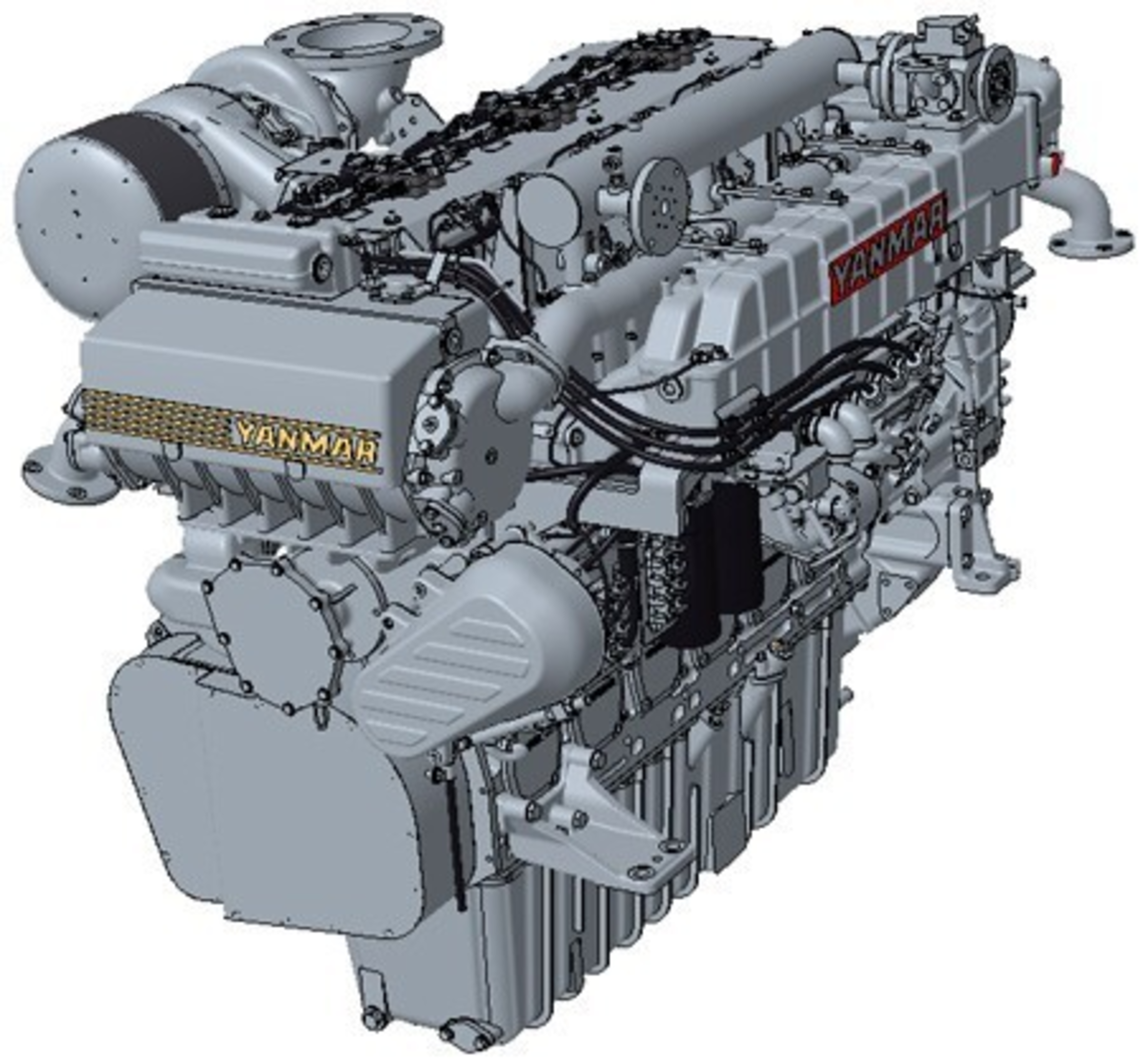
YPT announced in January that it had embarked on the development of a hydrogen-fueled four-stroke advanced high-speed engine to generate power for coastal vessels in Japan as part of the Zero Emission Ship Project. The engine operates only on hydrogen, emitting no CO2 during combustion.
Alongside the hydrogen engine development, YPT also said that it was working on creating a hydrogen engine-focused hybrid electric propulsion vessel that combines hydrogen engine generators along with batteries.
The vessel design integrates a container unit-type hydrogen power generation system on its upper deck. Shipping company Uyeno TransTech Co. is responsible for the vessel’s development and construction.
In August 2023, YPT introduced its maritime hydrogen fuel cell system. In November, the firm made the first delivery of its newly commercialized maritime hydrogen fuel cell system to the passenger ship HANARIA, operated by MOTENA-Sea, which conducted a successful zero emission demonstration from March 26 to April 4.
In January this year, ClassNK (Nippon Kaiji Kyokai), Japan’s non-governmental ship classification society, awarded approval in principle (AiP) to YPT for a maritime hydrogen fuel cell system, marking the first AiP certification for such a system developed by a Japanese manufacturer.
The 300 kW maritime hydrogen fuel cell system developed by YPT was designed with key auxiliary components such as gas valve units integrated within the system enclosure, designed to facilitate easy installation on ships.
ClassNK said it carried out a review of the system based on its guideline and issued the AiP upon confirming the system complied with the prescribed requirements.
The Paris Agreement, adopted in 2015 at the Conference of the Parties to the U.N. Framework Convention on Climate Change (COP 21), accelerated the global move toward decarbonization.
In July 2023, the International Maritime Organization (IMO) adopted a strategy to reach net-zero greenhouse gas (GHG) emissions from international shipping by or around 2050.
In Japan, then Japanese Prime Minister Yoshihide Suga in his first policy speech in October 2020 declared that Japan was aiming to cut GHG emissions to zero on a net basis to make it a carbon-neutral society by 2050.
According to a 2019 report of the Ministry of Land, Infrastructure, Transport and Tourism, Japan’s transport sector emitted 206 million tons of CO2 in 2019, accounting for 18.6% of the nation’s total emissions. Of these, approximately 10.25 million tons, or 5%, were from coastal shipping.
Seen as the ultimate green fuel, hydrogen only emits water during combustion and would account for some 55% of all alternative fuels to power inland ships in Japan in 2050, followed by batteries (about 38%) and ammonia (about 7%), according to the foundation’s scenario envisaging progress in the use of next-generation fuels by 2050.
If we are to help Japan to become a carbon-neutral country by 2050, it is essential to start designing and developing hydrogen and other zero emission ships now, because ships built today will stay on the water for decades, given the long lifetime of modern vessels (typically 25 to 35 years).
With Japan’s advanced technological capabilities, I sincerely hope that it will spearhead the global campaign to achieve carbon neutrality of the world’s maritime industry to fight climate change. To that end, the foundation is determined to support the nation’s fledgling fleet of zero emission ships for decades to come.
(End)