
Third Japanese Consortium Successfully Demonstrates Autonomous Ship Navigation Supported by The Nippon Foundation (2)

On February 6 and 7, the Mitsui O.S.K. Lines consortium set a new record for autonomous ship navigation with the Sunflower Shiretoko, a 190-meter-long 11,410 gross-ton ferry.
The test followed the normal commercial route of the ferry, which traveled a distance of 750 kilometers over roughly 18 hours, from Tomakomai, Hokkaido, northernmost Japan, to Oarai, Ibaraki Prefecture, northeast of Tokyo, on the Pacific coast, marking the world’s longest successful demonstration of fully autonomous navigation in terms of both distance and time.
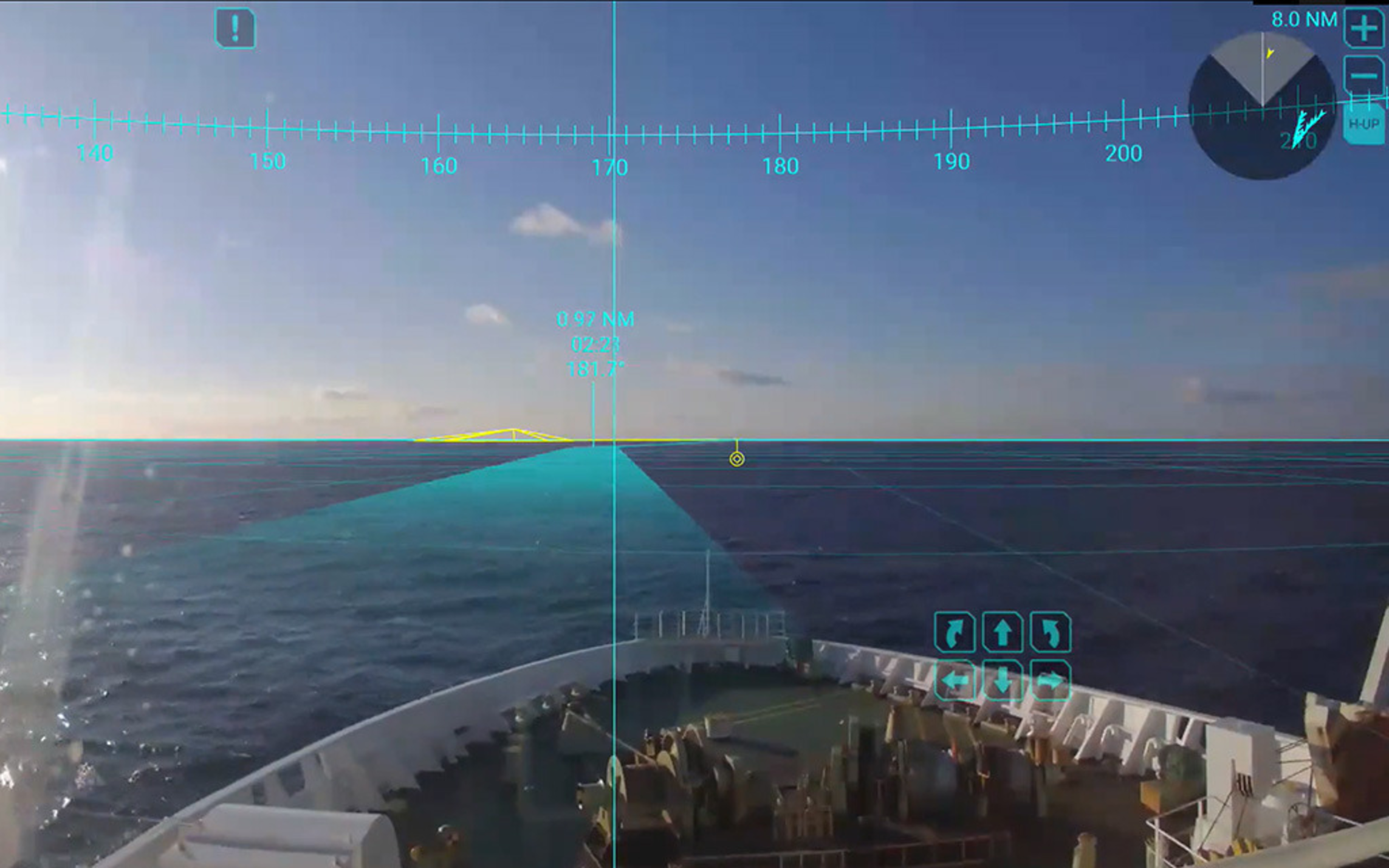
Technologies developed for this project included an automated berthing and unberthing system and an augmented reality (AR) navigation system for monitoring from land, which will contribute to improved safety and reduced workloads for ships’ crews.
Large car ferries transport both cargo and passengers simultaneously, and play an important role in domestic logistics, with marine transport handling more than 80% of logistics between Hokkaido and the Kanto region, including Tokyo.
According to the Maritime Bureau of the Ministry of Land, Infrastructure Transport and Tourism, the number of domestic passenger ferry crew members has declined by 30% since 2000 to roughly 7,000, which, given the length of car ferry voyages, is adding to the workload of seafarers.
The success of this demonstration is expected to help reduce both crew workloads and operating costs.
To detect other ships and obstacles, the vessel was outfitted with a fully autonomous navigation system developed using artificial intelligence (AI) to “teach” the ship to detect other vessels, information from an automatic identification system (AIS) and radar, as well as visible light cameras and infrared cameras for use at night.
Algorithms were also developed to avoid collisions with other ships and obstacles. As these vessels will need to be monitored from land, an autonomous navigation system was developed using AR (augmented reality) technology to superimpose various pieces of information onto images sent from the vessel.
The demonstrations involving the containership Mikage that I detailed in part one of this blog and of the Sunflower Shiretoko-two vessels of different types-mark an important step in “MEGURI 2040” initiative, launched by The Nippon Founation in February 2020 with an eye to putting unmanned ships into commercial service in 2025 and making half of Japan’s domestic coastal ships crewless by 2040.
All the five groups participating in the project are conducting demonstrations of their crewless navigation technologies between January and March 2022. I sincerely hope the remaining two consortia will successfully demonstrate their autonomous technologies, adding further momentum to this ambitious project.
